Introduction
Creating a budget is easy. Sticking to it is the real challenge.
Many businesses carefully allocate funds at the beginning of the financial year, only to discover months later that departments have exceeded budgets, expenses have risen unexpectedly, and forecasting has become increasingly difficult. The problem isn’t always overspending—it’s often a lack of visibility into where money is going.
This is where expense analytics plays a crucial role. Instead of relying on spreadsheets and month-end reports, businesses can analyze spending in real time, identify cost-saving opportunities, and make informed financial decisions before small issues become major budget concerns.
When paired with modern finance reporting tools and a reliable corporate finance solution, expense analytics helps finance teams improve budgeting accuracy, strengthen financial control, and support long-term business growth. In this guide, we’ll explore how expense analytics contributes to strategic budget planning and why it’s becoming an essential part of modern financial management.
What Is Expense Analytics?
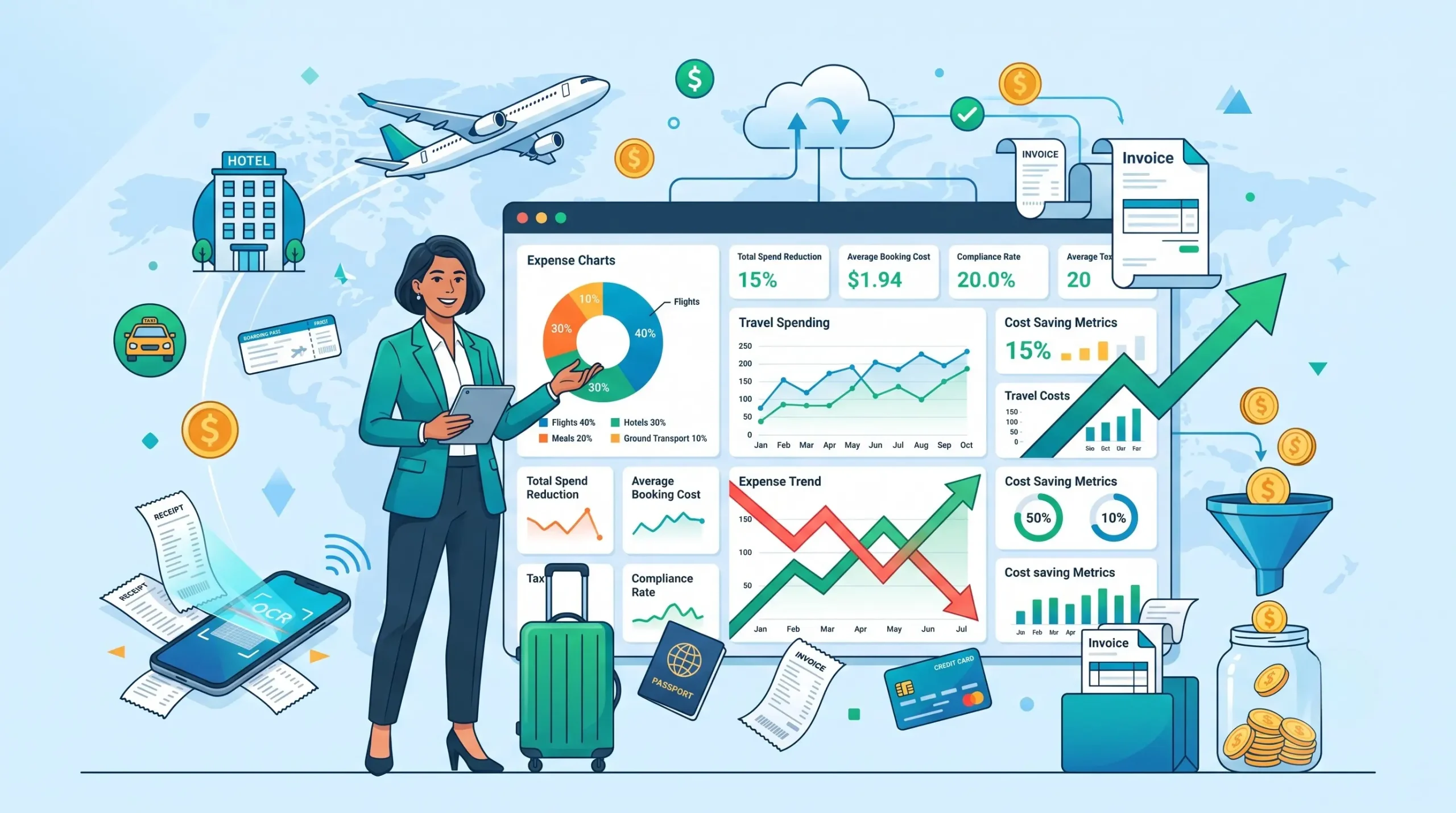
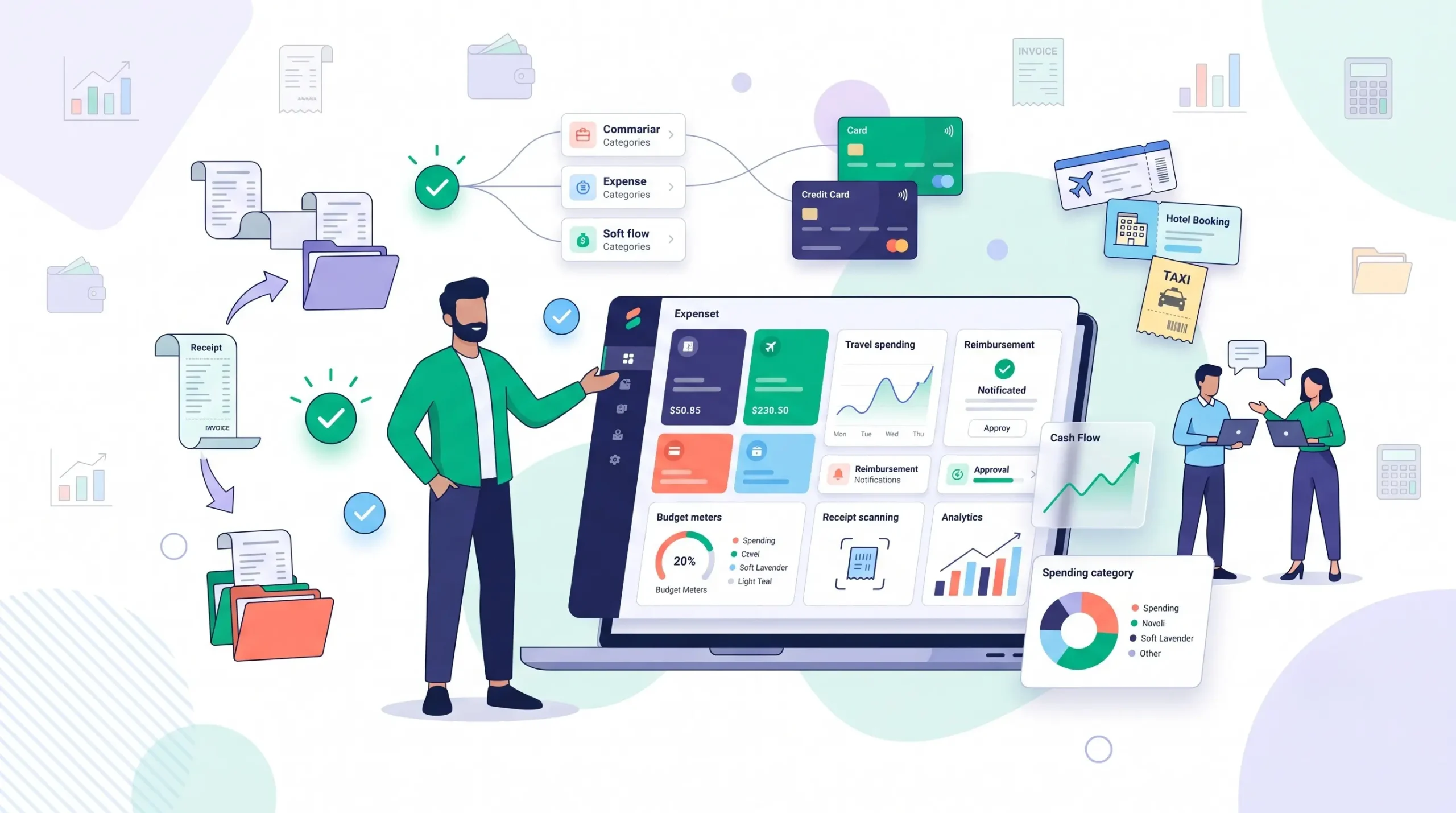
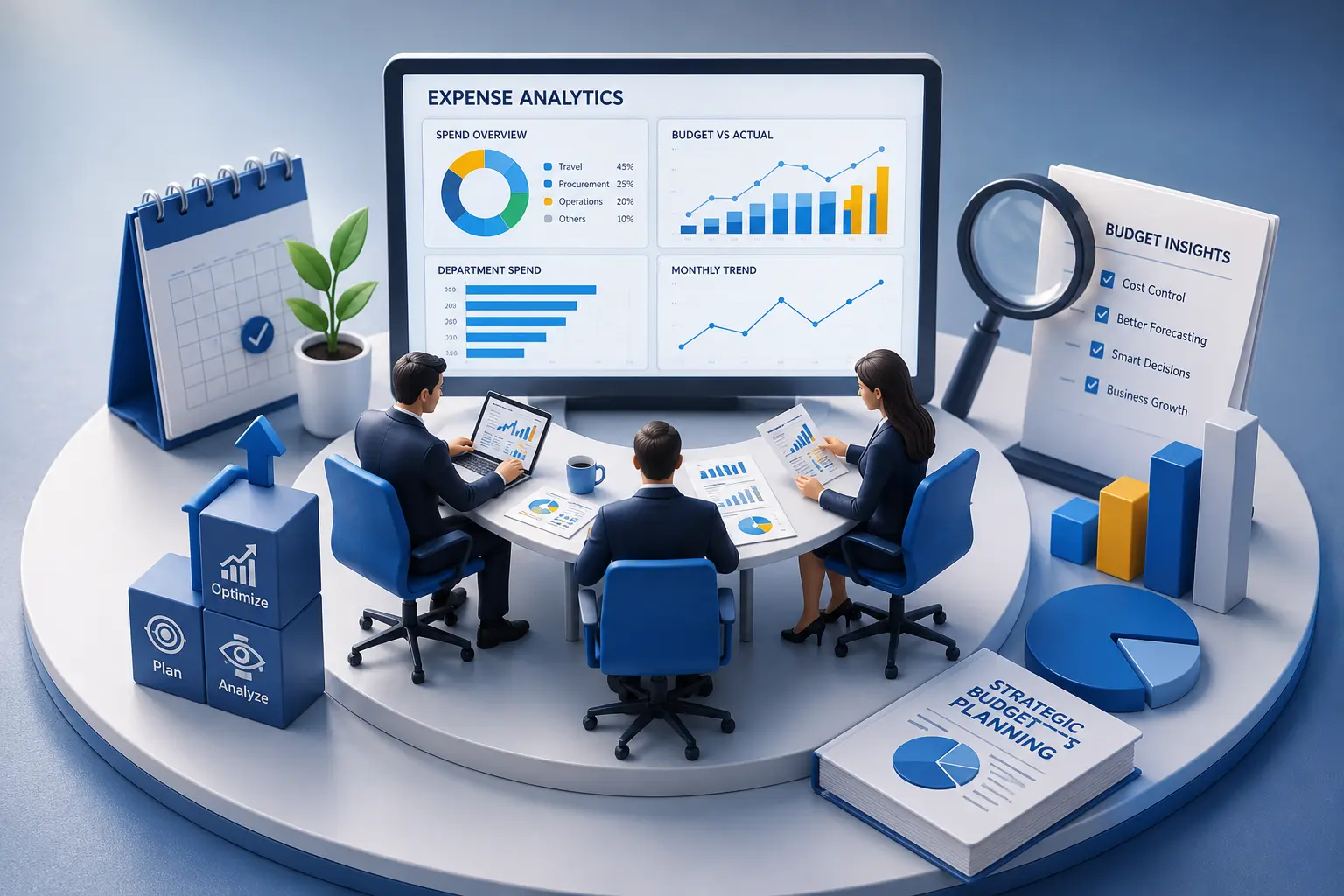
Expense analytics is the process of collecting, organizing, and analyzing business spending data to understand how money is being used across an organization. Rather than simply recording expenses for accounting purposes, it helps finance teams identify trends, monitor budgets, and uncover opportunities to optimize spending.
Expense analytics can answer important questions such as:
- Which departments spend the most?
- Are employee expenses increasing month over month?
- Which vendors account for the highest costs?
- Are there recurring expenses that can be reduced?
- How closely is actual spending aligned with the planned budget?
These insights enable finance leaders to make proactive decisions instead of reacting after budgets have already been exceeded.
Why Expense Analytics Matters for Strategic Budget Planning
A budget should be more than a yearly financial document. It should be a dynamic plan that adapts to changing business conditions.
Expense analytics provides the data needed to make budgeting more accurate and responsive.
Improves Budget Accuracy
Budgets built on assumptions often miss the mark. By analyzing historical spending patterns, finance teams can estimate future expenses more realistically.
Reviewing previous travel costs, procurement expenses, employee reimbursements, and operational spending helps create budgets based on actual business performance rather than guesswork.
Detects Overspending Early
Real-time expense monitoring allows organizations to identify unusual spending before it becomes a significant financial issue.
Whether it’s unexpected travel costs, duplicate expense claims, or departments approaching their spending limits, early visibility enables quick corrective action.
Strengthens Financial Forecasting
Accurate forecasting depends on reliable data. Expense analytics identifies seasonal spending trends, recurring expenses, and growth patterns that improve financial projections.
This allows businesses to prepare for future costs with greater confidence.
Key Benefits of Expense Analytics
Complete Spending Visibility
Business expenses are often spread across multiple systems, making it difficult to obtain a complete financial picture.
Expense analytics consolidates data from:
- Employee expense claims
- Corporate travel
- Vendor payments
- Procurement systems
- Accounting software
A centralized view allows finance teams to monitor spending across the entire organization from one dashboard.
Better Decision-Making
Reliable financial data leads to better business decisions.
Instead of applying blanket budget cuts across all departments, finance leaders can identify areas that genuinely require cost optimization while continuing to invest in high-performing teams and strategic initiatives.
Improved Cost Control
Expense analytics helps businesses identify unnecessary spending, including:
- Duplicate software subscriptions
- Unused vendor contracts
- Out-of-policy purchases
- Frequent last-minute travel bookings
- Excessive reimbursement claims
Addressing these issues can generate meaningful cost savings without affecting business operations.
Enhanced Compliance
Expense policies are easier to enforce when spending is monitored continuously.
Finance teams can quickly identify policy violations, missing receipts, duplicate claims, and unauthorized purchases, reducing compliance risks and simplifying audits.
Important Metrics Every Finance Team Should Monitor
Tracking the right metrics helps organizations make smarter budgeting decisions.
Budget Variance
Budget variance measures the difference between planned and actual spending.
Regularly reviewing this metric helps finance teams identify departments or projects that consistently exceed budgets and investigate the reasons behind those variances.
Department-Wise Spending
Monitoring spending by department improves accountability and helps identify where budgets are being used effectively.
It also supports more accurate budget allocation during future planning cycles.
Expense Categories
Analyzing expenses by category, such as travel, software, marketing, utilities, and employee reimbursements, highlights areas where spending is increasing faster than expected.
Vendor Spending
Vendor analysis reveals which suppliers account for the largest share of expenses and identifies opportunities to negotiate better contracts or consolidate vendors.
How Finance Reporting Tools Support Expense Analytics
Expense analytics becomes significantly more valuable when supported by modern finance reporting tools.
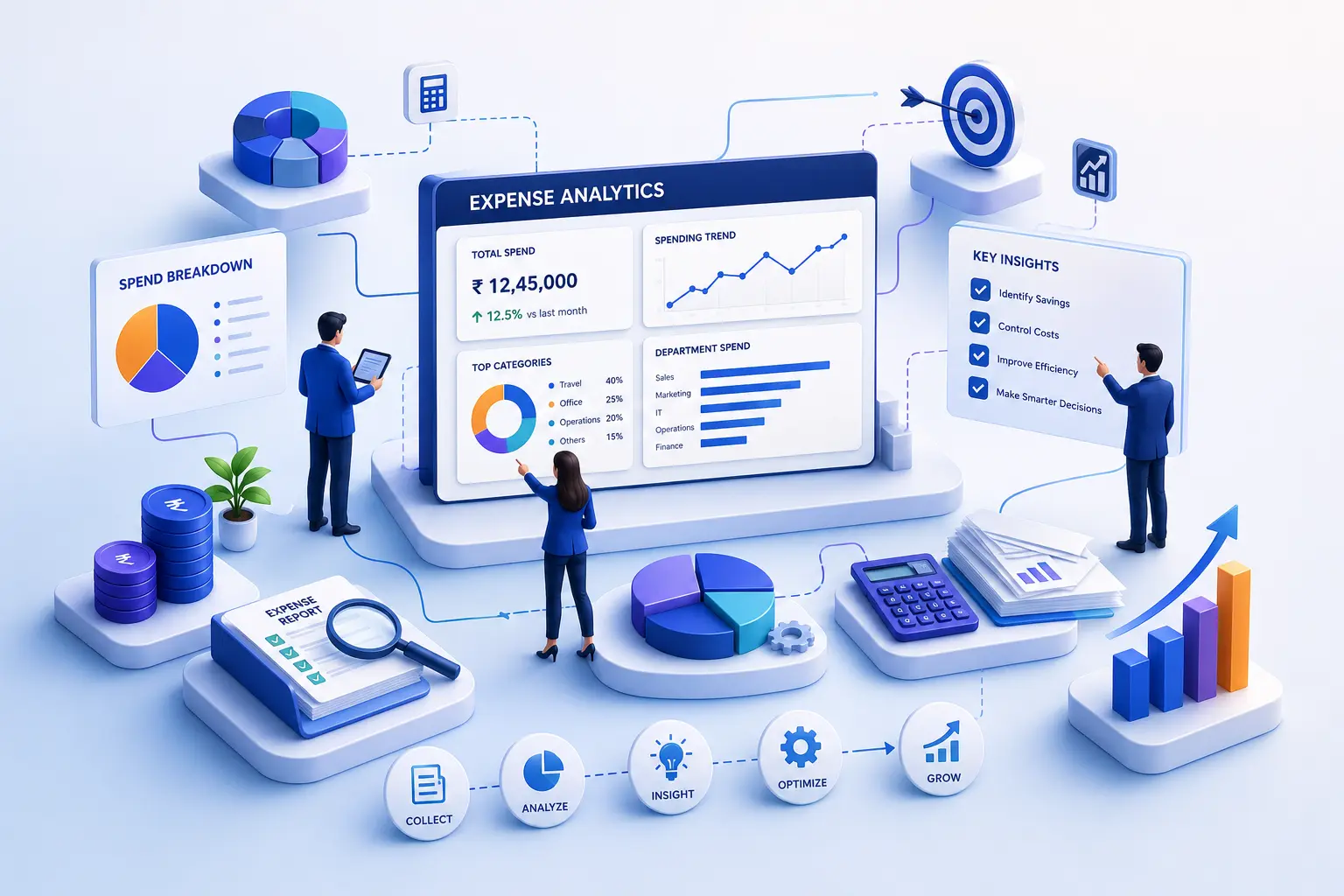
Instead of manually preparing monthly reports, finance teams receive automated dashboards and real-time financial insights that improve decision-making.
Some of the most valuable capabilities include:
Automated Reporting
Finance reporting tools automatically generate reports for budgets, expenses, reimbursements, vendor spending, and departmental performance.
Automation saves time while reducing manual errors.
Real-Time Dashboards
Interactive dashboards provide instant visibility into:
- Current spending
- Budget utilization
- Expense trends
- Department performance
- Financial summaries
Decision-makers no longer need to wait until month-end to understand the organization’s financial position.
Faster Financial Reviews
Rather than collecting data from multiple spreadsheets, finance teams can review consolidated reports within minutes.
This enables quicker responses to unexpected spending changes.
Why Businesses Need a Corporate Finance Solution
Expense analytics delivers the best results when integrated into a comprehensive corporate finance solution.
Instead of managing budgeting, expense reporting, approvals, and financial reporting through disconnected systems, organizations benefit from a single platform that brings financial data together.
A modern corporate finance solution typically includes:
- Expense management
- Budget planning
- Approval workflows
- Financial reporting
- Analytics dashboards
- Policy compliance monitoring
- Travel and reimbursement management
This unified approach improves collaboration between finance, procurement, HR, and business leaders while ensuring everyone works from the same financial data.
Best Practices for Effective Expense Analytics
Businesses can maximize the value of expense analytics by following these practical strategies.
Standardize Expense Categories
Use consistent categories across all departments to improve reporting accuracy and simplify analysis.
Monitor Spending Regularly
Review expenses weekly or monthly instead of waiting until quarterly or annual budget reviews.
Frequent monitoring helps identify problems before they affect financial performance.
Set Automated Alerts
Configure notifications for:
- Budget thresholds
- Policy violations
- High-value transactions
- Unusual spending patterns
Automation allows finance teams to respond immediately.
Use Historical Data
Past spending trends provide valuable context for future budget planning and forecasting.
Historical analysis reduces reliance on assumptions.
Promote Cross-Department Collaboration
Budget planning should involve department managers as well as finance teams.
When business units understand their spending patterns, they become more accountable for budget performance.
The Future of Expense Analytics
As finance technology evolves, expense analytics is becoming more intelligent and predictive.
Businesses are increasingly adopting solutions that offer:
- AI-powered spending insights
- Predictive budget forecasting
- Automated anomaly detection
- Smart policy enforcement
- Real-time executive dashboards
These capabilities enable finance teams to shift from reactive reporting to proactive financial planning.
Organizations that embrace data-driven budgeting will be better positioned to control costs, improve profitability, and adapt to changing business conditions.
Conclusion
Strategic budget planning requires more than setting annual spending limits. It demands continuous visibility into business expenses, accurate forecasting, and timely financial insights.
Expense analytics empowers organizations to understand spending patterns, identify savings opportunities, improve compliance, and make informed budgeting decisions. Combined with advanced finance reporting tools and a comprehensive corporate finance solution, businesses can streamline financial operations while building stronger, more resilient budgets.
Companies that leverage expense analytics today will be better prepared to make confident financial decisions tomorrow.
Frequently Asked Questions
What is expense analytics?
Expense analytics is the process of analyzing business spending data to identify trends, improve budgeting, reduce unnecessary costs, and support better financial decision-making.
How do finance reporting tools improve budgeting?
Finance reporting tools automate report generation, provide real-time financial dashboards, reduce manual work, and help businesses monitor budgets more accurately.
Why is expense analytics important for strategic planning?
Expense analytics provides valuable insights into spending behavior, helping organizations forecast accurately, optimize budgets, and make data-driven financial decisions.
What should a corporate finance solution include?
A corporate finance solution should offer expense management, budgeting, reporting, analytics, approval workflows, compliance tracking, and integration with accounting systems.
Can small businesses benefit from expense analytics?
Yes. Small and growing businesses can improve cash flow management, reduce unnecessary expenses, strengthen financial control, and make smarter budgeting decisions using expense analytics.
Ready to take control of your business spending?
Turn expense data into smarter budgeting decisions with real-time visibility and actionable insights.
Book a Demo Today and discover a smarter way to manage, analyze, and optimize your business expenses.
This CTA aligns with the blog’s core message around using expense analytics for better budgeting, cost control, and financial decision-making.