


Introduction
Imagine paying for a business trip with your own money, submitting an expense claim, and then waiting weeks for reimbursement. During that time, you’re following up with finance, searching for missing receipts, and wondering when the payment will finally arrive. Unfortunately, this isn’t an uncommon experience for many employees.
While delayed expense reimbursements may seem like a minor operational issue, they can have a significant impact on employee satisfaction, productivity, and trust. Employees who regularly face reimbursement delays often feel undervalued, especially when they’re covering business expenses out of their own pockets.
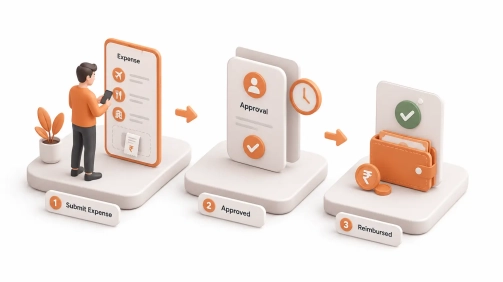
This is why organizations are investing in modern travel and expense management solutions and adopting an intelligent expense reporting platform. These technologies streamline the reimbursement process, improve transparency, and create a better experience for both employees and finance teams.
In this article, we’ll explore how expense delays affect employee morale, the business costs of inefficient reimbursement processes, and practical ways organizations can eliminate delays through automation.
Why Timely Expense Reimbursement Matters
Expense reimbursement isn’t just a finance function. It’s an important part of the overall employee experience.
Employees often pay for business-related expenses such as:
- Flight tickets
- Hotel stays
- Local transportation
- Client meals
- Office supplies
- Conference registrations
When reimbursements are processed quickly, employees feel supported and confident that the organization values their contributions. However, repeated delays can create frustration and reduce trust in internal processes.
Timely reimbursements also improve financial well-being, especially for employees who frequently travel for work or manage large client-facing responsibilities.
How Expense Delays Affect Employee Satisfaction
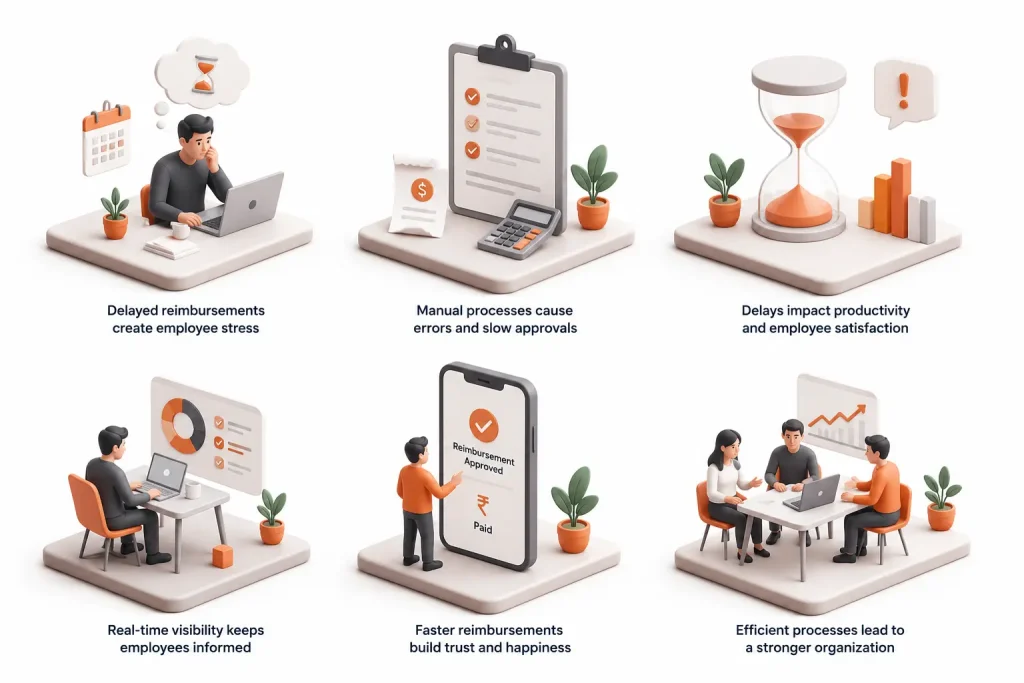
Delayed reimbursements have consequences that extend far beyond finance. They influence how employees perceive the organization and their day-to-day work experience.
Financial Stress
Not every employee has the flexibility to cover business expenses for extended periods.
Waiting several weeks for reimbursement can strain personal finances, particularly when travel costs include flights, hotels, or client entertainment.
Over time, this financial pressure can negatively affect motivation and engagement.
Reduced Trust in the Organization
Employees expect companies to honor legitimate business expenses promptly.
When claims remain pending without updates, employees may feel that their concerns are not a priority. Lack of communication often creates more frustration than the delay itself.
A transparent reimbursement process helps build confidence between employees and finance teams.
Lower Productivity
Employees should focus on their work, not on following up about expense claims.
Manual reimbursement processes often require employees to:
- Send multiple reminder emails
- Contact finance teams for updates
- Search for missing receipts
- Correct claim errors
- Resubmit documentation
These unnecessary tasks reduce productivity and consume valuable working hours.
Declining Employee Engagement
Small operational issues can significantly influence workplace satisfaction.
Repeated reimbursement delays create negative experiences that affect employee morale, particularly for sales teams, consultants, and frequent business travelers.
Organizations with efficient reimbursement systems often report stronger employee satisfaction and better retention.
Why Expense Delays Happen
Many reimbursement challenges originate from outdated processes rather than employee mistakes.
Manual Expense Reporting
Paper forms, spreadsheets, and email approvals create unnecessary delays.
Finance teams spend considerable time reviewing claims manually, increasing processing time and the likelihood of errors.
Slow Approval Workflows
Expense reports frequently pass through multiple approval levels.
If even one approver is unavailable, the entire reimbursement process comes to a standstill.
Without automated reminders or escalation workflows, approvals can remain pending for days or weeks.
Missing or Incorrect Documentation
Employees sometimes forget receipts or enter incorrect information.
Finance teams must request additional documentation before processing payments, extending reimbursement timelines.
Limited Visibility
One of the biggest frustrations for employees is not knowing the status of their claims.
Without a centralized tracking system, employees often contact finance teams simply to ask whether their reimbursement has been approved.
The Business Impact of Delayed Expense Reimbursements
Expense delays don’t just affect employees. They also create measurable business challenges.
Increased Administrative Work
Finance teams spend significant time answering reimbursement queries instead of focusing on strategic financial planning.
Automated processes reduce repetitive administrative tasks and improve overall efficiency.
Higher Risk of Errors
Manual processes increase the likelihood of:
- Duplicate claims
- Data entry mistakes
- Missing receipts
- Incorrect reimbursements
- Compliance issues
These errors can become costly during audits or financial reporting.
Employee Retention Challenges
Although reimbursement delays alone may not cause employees to leave, they contribute to a poor workplace experience.
Combined with other operational frustrations, slow reimbursements can reduce employee loyalty over time.
Poor Financial Visibility
Delayed expense processing also affects management.
If expense reports are submitted weeks after spending occurs, finance teams lose real-time visibility into organizational costs, making budgeting and forecasting less accurate.
How Travel and Expense Management Solves These Challenges
Modern travel and expense management software automates the entire expense lifecycle, reducing delays while improving accuracy.
Faster Expense Submission
Employees can submit claims immediately using mobile devices.
Instead of collecting paper receipts, they simply photograph receipts and upload them directly into the system.
This speeds up reporting while reducing lost documentation.
Automated Approval Workflows
Expense reports are automatically routed to the appropriate managers based on company policies.
Approvers receive instant notifications, helping reduce approval bottlenecks.
Automated escalation rules ensure pending claims continue moving through the process.
Real-Time Expense Tracking
Employees can view the status of every claim without contacting finance.
Typical tracking stages include:
- Submitted
- Under review
- Approved
- Reimbursement scheduled
- Payment completed
This transparency reduces uncertainty and improves employee confidence.
Built-In Policy Compliance
Travel and expense management systems automatically check claims against company policies.
Potential issues such as duplicate expenses, missing receipts, or spending limit violations are flagged before reaching finance teams.
This reduces manual reviews and accelerates reimbursements.
Why an Expense Reporting Platform Improves Employee Experience
An advanced expense reporting platform benefits both employees and finance departments.
Mobile Accessibility
Employees can submit expenses from anywhere, making reporting convenient during business travel.
Automated Receipt Management
Digital receipt capture eliminates paperwork and reduces missing documentation.
Faster Reimbursements
Automation shortens approval cycles, allowing employees to receive payments much sooner.
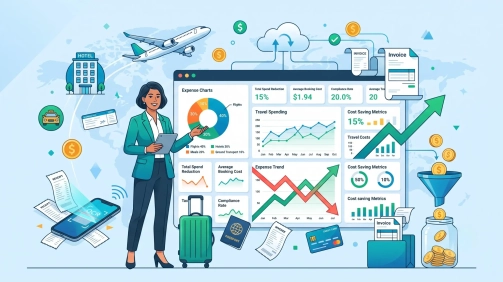
Better Reporting
Finance leaders gain access to dashboards showing:
- Outstanding claims
- Average reimbursement time
- Department-wise expenses
- Policy violations
- Spending trends
These insights help improve financial planning while ensuring a better employee experience.
Best Practices for Reducing Expense Delays
Organizations looking to improve reimbursement processes should consider the following strategies.
Digitize Expense Reporting
Replace spreadsheets and paper forms with a centralized expense reporting platform.
Simplify Approval Processes
Reduce unnecessary approval layers while automating routing and reminders.
Define Clear Expense Policies
Employees should understand:
- Eligible expenses
- Spending limits
- Receipt requirements
- Submission deadlines
Clear policies reduce errors and speed up approvals.
Encourage Prompt Expense Submission
Employees should submit expenses immediately after travel rather than waiting until the end of the month.
This keeps financial records accurate and improves cash flow visibility.
Monitor Reimbursement Performance
Track key metrics such as:
- Average reimbursement time
- Pending claims
- Approval turnaround
- Policy compliance rate
Continuous monitoring helps identify process improvements.
Conclusion
Expense reimbursements are more than an administrative task—they directly influence employee satisfaction, trust, and productivity. When employees experience long reimbursement delays, they often feel frustrated, financially burdened, and less engaged at work.
By investing in modern travel and expense management software and implementing a reliable expense reporting platform, organizations can simplify expense reporting, automate approvals, improve financial visibility, and ensure employees are reimbursed quickly and accurately.
A faster, more transparent reimbursement process benefits everyone. Employees spend less time chasing payments, finance teams reduce administrative workloads, and businesses build a stronger culture of trust and accountability.
Frequently Asked Questions
Why do expense reimbursement delays affect employee satisfaction?
Delayed reimbursements create financial stress, reduce trust in the organization, and force employees to spend extra time following up on payments instead of focusing on their work.
What is travel and expense management?
Travel and expense management is the process of managing business travel bookings, expense claims, approvals, reimbursements, and policy compliance through a centralized system.
How does an expense reporting platform improve reimbursements?
An expense reporting platform automates expense submission, approval workflows, receipt management, and reimbursement tracking, significantly reducing processing times.
What causes reimbursement delays?
Common reasons include manual approvals, missing receipts, outdated reporting systems, multiple approval levels, and limited visibility into claim status.
How can businesses reduce expense processing time?
Businesses can reduce delays by digitizing expense reporting, automating approvals, implementing clear expense policies, and using real-time expense tracking tools.
Ready to Eliminate Expense Delays?
Don’t let slow reimbursements impact employee morale or create unnecessary administrative work. With ExpenseOut’s intelligent travel and expense management solution, your business can automate expense reporting, accelerate approvals, improve policy compliance, and provide employees with a seamless reimbursement experience.
Book a personalized demo today to see how ExpenseOut can help your organization simplify expense management, improve employee satisfaction, and give your finance team complete control over every business expense.