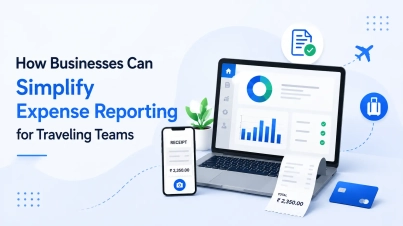


Every finance team wants tighter cost control, faster reimbursements, and accurate spending visibility. Yet many enterprises still rely on spreadsheets, paper receipts, email approvals, and disconnected systems to manage employee expenses. At first glance, manual expense processing may seem manageable and inexpensive. However, beneath the surface, it creates operational inefficiencies that quietly cost businesses far more than expected.
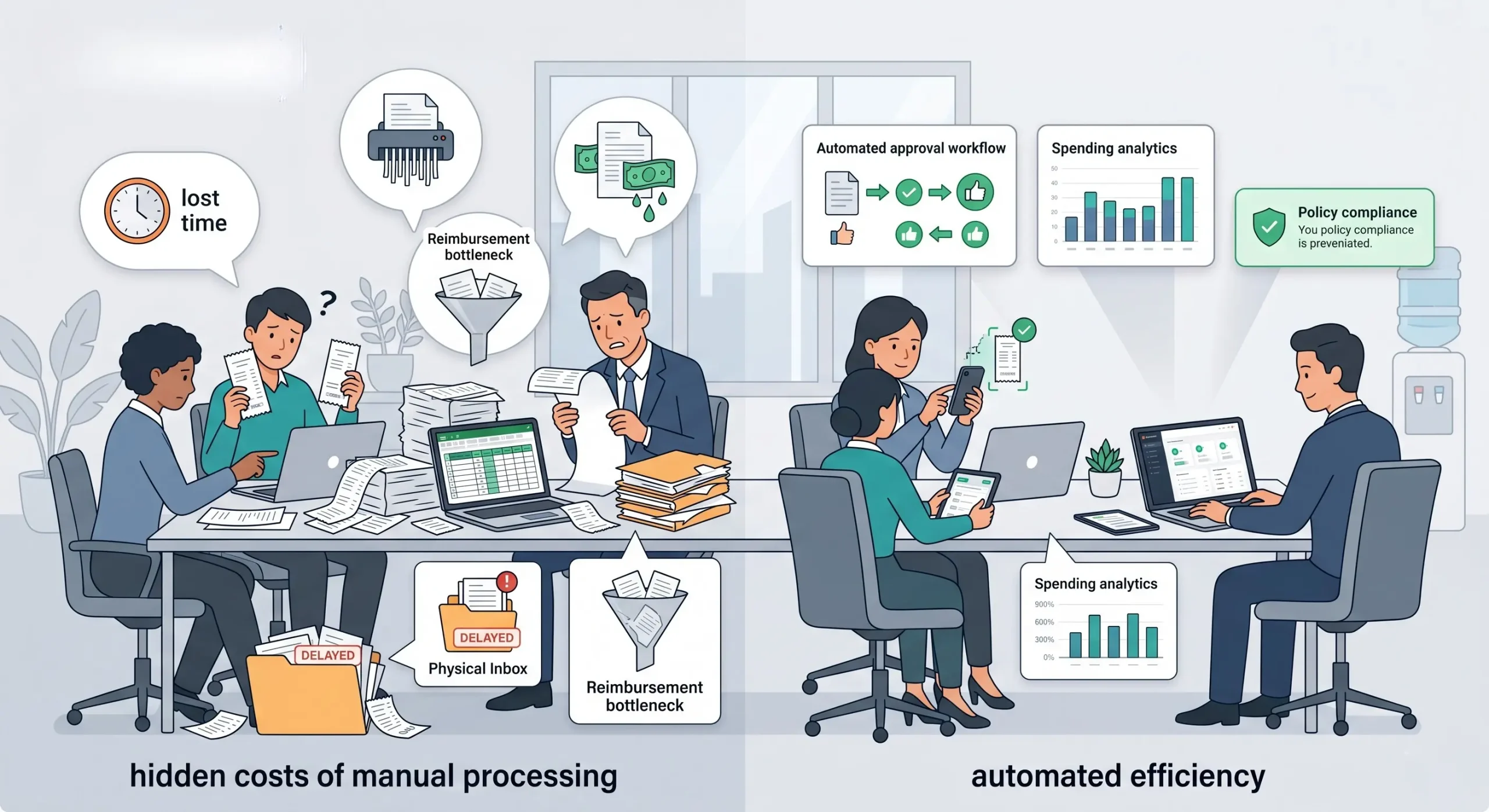
Manual workflows slow down approvals, increase compliance risks, create reimbursement delays, and make expense tracking difficult for finance leaders. Employees lose valuable time filing claims, while finance teams spend hours reviewing reports, correcting mistakes, and chasing missing receipts.
As organizations grow, these hidden costs multiply quickly. This is why businesses are increasingly investing in modern corporate expense management solutions and intelligent expense reporting software to automate workflows and improve financial visibility.
In this blog, we’ll explore the hidden costs of manual expense processing, explain how they impact enterprises, and discuss how expense analytics software helps businesses reduce inefficiencies, improve compliance, and make smarter financial decisions.
Why Many Enterprises Still Use Manual Expense Processing
Despite rapid digital transformation, many companies continue using outdated expense management methods. Some organizations depend on spreadsheets because they are familiar and inexpensive to maintain initially. Others hesitate to adopt automation due to implementation concerns or resistance to operational change.
Unfortunately, manual processes become increasingly inefficient as companies expand.
Common manual expense management practices include:
- Paper-based receipts
- Spreadsheet expense tracking
- Email approval workflows
- Manual data entry
- Disconnected finance systems
- Delayed reimbursement cycles
While these methods may appear manageable for smaller teams, they become difficult to scale across growing enterprises.
Productivity Loss Across Employees and Finance Teams
One of the biggest hidden costs of manual expense processing is lost productivity.
Employees spend unnecessary time:
- Collecting physical receipts
- Filling out spreadsheets
- Correcting submission errors
- Responding to finance queries
- Waiting for approvals
Managers also lose time reviewing expense reports manually and verifying policy compliance.
Meanwhile, finance teams handle repetitive administrative tasks such as:
- Validating receipts
- Reviewing duplicate claims
- Entering data into accounting systems
- Tracking missing documents
- Reconciling reimbursements
These repetitive processes consume hours that could otherwise be spent on strategic financial planning and business growth.
Modern corporate expense management platforms automate these workflows and significantly reduce administrative burden.
Delayed Reimbursements Affect Employee Satisfaction
Employees expect reimbursement processes to be fast, transparent, and simple. Unfortunately, manual workflows often create delays that frustrate employees and impact workplace satisfaction.
When reimbursement cycles stretch across weeks, employees may feel financially burdened, especially frequent business travelers who regularly pay for hotels, meals, and transportation.
Slow reimbursements can also:
- Reduce employee trust in internal processes
- Lower morale among traveling employees
- Create frustration with finance departments
- Impact productivity and engagement
Modern expense reporting software speeds up approvals and reimbursements through automation, mobile expense submission, and real-time workflow tracking.
Manual Errors Lead to Financial Leakage
Human error is unavoidable in manual expense systems.
Common expense reporting mistakes include:
- Duplicate expense submissions
- Incorrect expense categorization
- Missing receipts
- Tax calculation errors
- Currency conversion inaccuracies
- Incorrect mileage claims
Even minor inaccuracies can lead to significant financial leakage when multiplied across departments and reporting cycles.
Manual verification processes make it difficult for finance teams to identify inconsistencies quickly.
Automated expense reporting software reduces these risks by validating claims instantly and flagging suspicious entries before reimbursement approvals.
Lack of Real-Time Expense Visibility
Many enterprises struggle with delayed financial visibility because manual expense data is scattered across spreadsheets, emails, and disconnected systems.
Without centralized expense tracking, finance leaders cannot easily monitor:
- Department-wise spending
- Travel expenses
- Budget utilization
- Pending reimbursements
- Policy violations
This lack of visibility makes forecasting and financial planning more difficult.
Expense analytics software provides centralized dashboards and real-time spending insights that help finance teams monitor expenses across the organization.
With better visibility, businesses can identify spending trends, improve budget planning, and make faster financial decisions.
Compliance Risks Increase With Manual Workflows
Expense compliance becomes much harder when enterprises rely on manual processes.
Organizations must ensure employees follow:
- Travel policies
- Spending limits
- Approval hierarchies
- Tax compliance requirements
- Receipt documentation standards
Manual workflows make policy enforcement inconsistent and difficult to manage at scale.
As enterprises grow, compliance risks increase significantly. Businesses may face:
- Unauthorized spending
- Incomplete documentation
- Audit complications
- Tax reporting issues
- Policy violations
Corporate expense management software automatically checks expense claims against company policies and flags violations before reimbursements are processed.
This reduces compliance risks and improves audit readiness.
Expense Fraud Becomes Harder to Detect
Expense fraud is a serious challenge for enterprises using manual systems.
Examples of expense fraud include:
- Duplicate reimbursement claims
- Fake receipts
- Inflated hotel expenses
- Personal purchases submitted as business expenses
- Mileage exaggeration
Manual reviews are often inconsistent because finance teams process large volumes of expense reports under time pressure.
Modern expense analytics software uses automation, OCR receipt scanning, and intelligent fraud detection capabilities to identify suspicious activity quickly.
Digital audit trails also make it easier to verify approvals and track expense history during audits.
Finance Teams Spend Too Much Time on Administrative Tasks
Highly skilled finance professionals should focus on strategic activities such as:
- Financial forecasting
- Budget planning
- Cash flow management
- Spend optimization
- Business growth analysis
However, manual expense processing forces finance teams to spend excessive time on repetitive administrative work.
Tasks like data entry, receipt validation, follow-up emails, and reimbursement reconciliation create operational bottlenecks.
Automation helps finance teams reduce repetitive workloads and focus on higher-value responsibilities that contribute to business growth.
Poor Data Accuracy Affects Decision-Making
Accurate expense data is essential for effective business planning.
When expense information is incomplete or inconsistent, leadership teams struggle to:
- Forecast budgets accurately
- Monitor departmental spending
- Identify cost-saving opportunities
- Analyze travel expenses
- Optimize vendor relationships
Expense analytics software improves data accuracy by centralizing expense information and automating reporting processes.
With reliable data, finance leaders can make smarter decisions based on real-time spending insights.
Signs Your Enterprise Has Outgrown Manual Expense Processing
Many businesses continue using outdated expense systems until operational challenges become overwhelming.
Your organization may need automated expense reporting software if:
- Reimbursements frequently get delayed
- Employees complain about expense processes
- Finance teams depend heavily on spreadsheets
- Policy violations are increasing
- Expense audits are becoming stressful
- Travel expenses are difficult to monitor
- Approval workflows are slow and inconsistent
Recognizing these warning signs early can help businesses avoid larger operational inefficiencies later.
How Automated Expense Management Improves Enterprise Efficiency
Modern corporate expense management solutions streamline every stage of expense processing.
Key benefits include:
Faster Expense Submission
Employees can upload receipts instantly through mobile apps and submit expenses from anywhere.
Automated Approval Workflows
Managers receive real-time notifications and can approve claims quickly without lengthy email chains.
Better Policy Compliance
Automated policy checks help organizations enforce spending limits and reduce compliance violations.
Centralized Expense Visibility
Finance teams gain access to real-time dashboards, analytics, and reimbursement tracking.
Improved Audit Readiness
Digital records simplify audits and reduce the risk of missing documentation.
Frequently Asked Questions
What is corporate expense management?
Corporate expense management is the process of tracking, approving, auditing, and reimbursing employee business expenses while ensuring financial visibility and policy compliance.
Why is manual expense processing inefficient?
Manual expense processing relies heavily on spreadsheets, paper receipts, and repetitive administrative work, which increases errors, delays reimbursements, and reduces operational efficiency.
How does expense reporting software help enterprises?
Expense reporting software automates expense submission, approvals, compliance checks, reimbursement tracking, and analytics to improve efficiency and financial visibility.
What are the biggest risks of manual expense management?
Major risks include fraud, duplicate claims, inaccurate reporting, compliance violations, delayed reimbursements, and poor expense visibility.
Final Thoughts
The hidden costs of manual expense processing extend far beyond paperwork. They affect productivity, compliance, employee satisfaction, financial visibility, and operational efficiency across the enterprise.
As businesses grow, relying on spreadsheets and disconnected workflows becomes increasingly unsustainable. Modern enterprises need intelligent, scalable, and automated solutions to manage expenses effectively.
With advanced corporate expense management tools, powerful expense analytics software, and automated expense reporting software, organizations can reduce inefficiencies, improve compliance, and gain better control over company spending.
If your business is still relying on manual expense workflows, now is the time to modernize your expense management process.
Explore how ExpenseOut can help your enterprise automate expense reporting, simplify reimbursements, and gain real-time spending visibility. Book a demo today and discover a smarter way to manage corporate expenses efficiently.