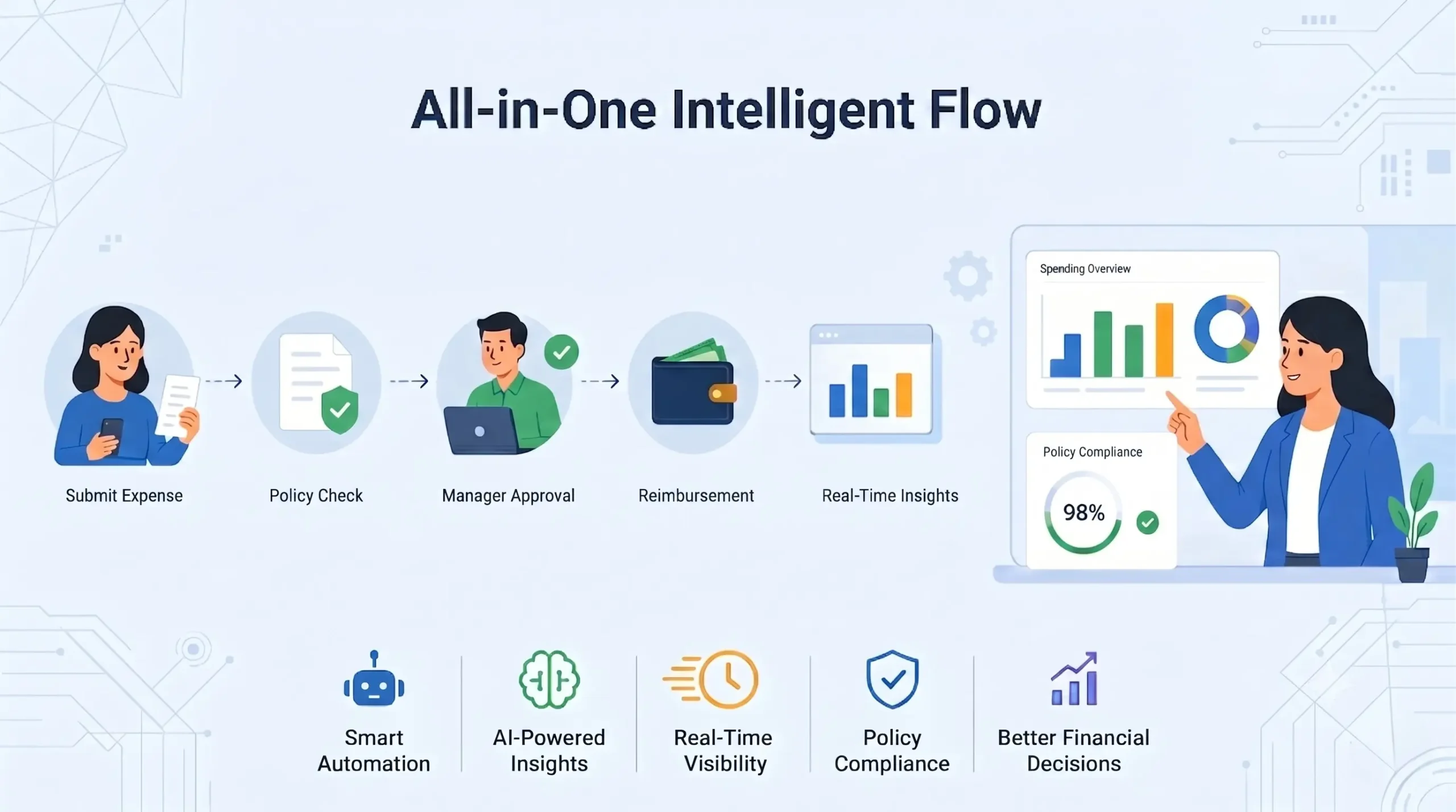
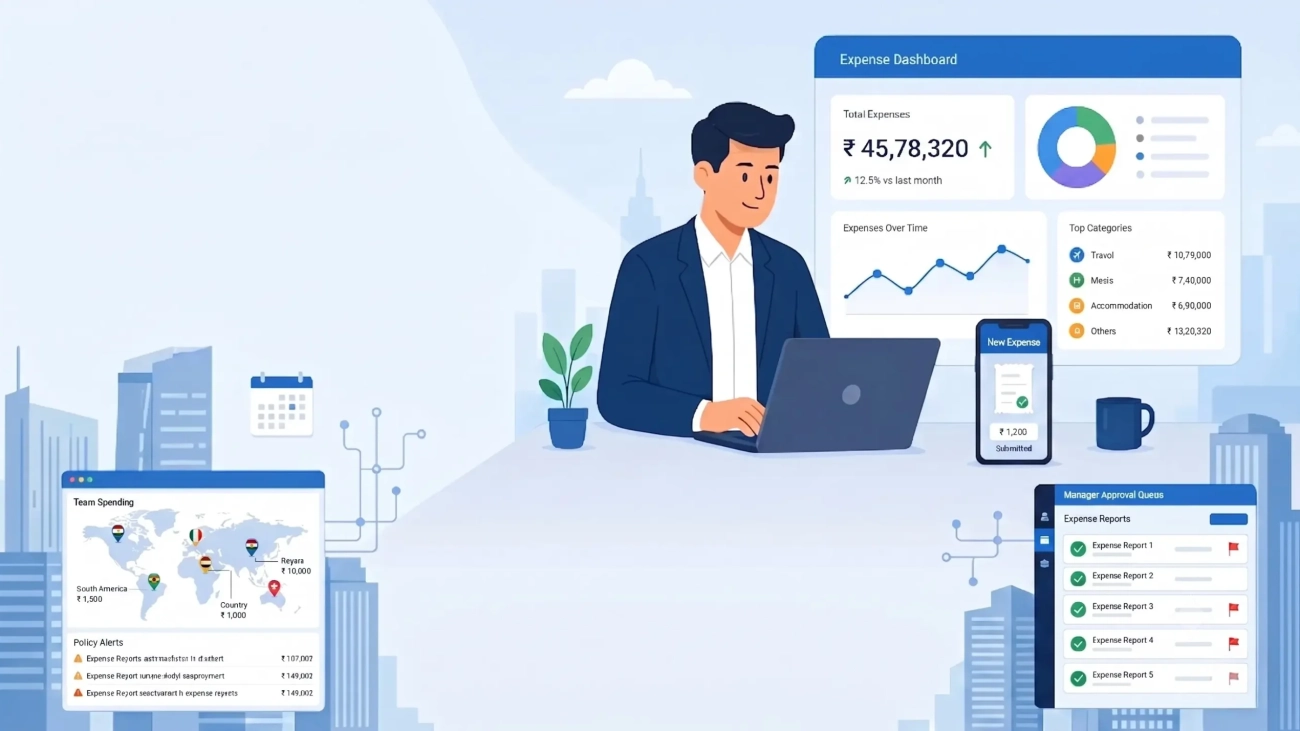


Finance chiefs and their teams are relying on technology to redefine expense management and focus more on analytical issues. Today, there are adaptable AI-driven technologies that automate travel & expense management, enable companies to make their own rules and decisions, and adapt criteria based on company specifications. Given the vast range of existing and emerging technologies, it can be challenging to know where to start. Here is an explainer to get you on your way.
How AI can help you
Travel expense management is a prime candidate for automation, as existing processes are still manual, time-consuming, and error prone. AI technologies are perfectly suited to this field and available in a wide range, from the simplest to the most advanced.
The AI also sees transactions in context, not in isolation, and can identify the most critical elements of a transaction, such as the value of the transaction and the amount of money it contains. The AI looks at everything in the transactions, from the lines to the elements, and it can also identify details of each element, such as the price, the number of transactions, and even the duration.
AI expense management solutions can help the organization in so many ways by enforcing specific policies. For example, corporates can set unique mileage rules based on the designation.
The application of employment and work from home policy has become a priority for many organizations, as more staff work from home and office hours are now much more flexible.
AI-based expense management systems allow the user to define rules for monitoring spending within a specific framework that represents specific customer projects or business events. The travel expenses statement indicates how many hours a person must work at home and how much time he or she works remotely on any given day. AI-driven expense management technology can use this to automatically apply different budgetary policies to different types of employees, such as those who work remotely and on a given day.
What companies can do to leverage AI
Organizations must ensure that they act under their employment and work from home policies.
This can be a complex undertaking, as there are often specific deviations and exceptions that need to be followed, such as the use of non-standard working methods in work from home.
Employees typically need to submit a signed business statement along with their expenses, and many organizations require prior approval from customers hosting sporting events. Although the format of these documents varies from organization to organization, the AI can read, understand, and review the documents to ensure that they are signed and that the company’s policies are followed. AI-based systems allow for custom requirement lists that automatically detect differences.
A customizable AI-based expense management system makes it easy to create custom rules that track employee spending and ensure they do not exceed their remuneration over time.
In today’s changing work environment, a one-size-fits-all approach is not sensible and not suitable for all employees.
Conclusion
If implemented correctly, this will result in a well-defined travel and expense system that sets clear expectations for employees, reduces fraud, and provides up-to-date expenditure data to improve financial management and decision-making.
Business travel serves many functions and impacts a wide range of business objectives, from reinforcing sales to strengthening partnerships, training, customer service, and professional development. Yet many organizations fail to invest in streamlining their Travel and Expense management.
Businesses can no longer rely on manual and legacy systems for expense management. Moving forward, automated solutions for tracking and reimbursing expenses, cloud technology to store receipts, and AI to identify fraud in expense reports can help organizations streamline their business processes.
Here, we delve into those promising technologies in more detail and see how much of an impact they can have on the bottom line of companies.
According to research, business travel expenses are the second most challenging operating cost to control. Investing in expense management software is worthwhile, especially if your employees travel a lot. An expense management system offers real-time visibility into your expenses, which will help your business with effective decision-making, policy formulation, and cost-cutting.
Forrester Consulting conducted a study on the Digital transformation of Travel and Expense (T&E). The outcome of 550 surveys indicates that many companies want to shift towards digital transformation. The survey respondents say that many organizations still rely on outdated tools that add more work burden to the employees, managers, and finance team. Participants agreed that digitization of expense management systems could improve user experience, increase efficiency, and provide detailed insights for better planning and cost control.
Organizations need to implement technology that makes it easy for business travelers to create reports and apply for reimbursement seamlessly through desktops and mobile phones. Mobile accessibility lets employees track their expenses from anywhere in the world. Employees can use the mobile app to scan and upload receipts and report various expenses. Additionally, the managers or finance team can use the app to instantly approve or reject expense reports.
By integrating your expense management solution with enterprise resource planning (ERP), human resource management, or accounting software, you can be on top of your business expenses, boost employee productivity, and bring down your organization’s T&E spend.
With working capital management continuing to be critical for many organizations, the ability to better forecast upcoming spending will be vital in 2022. Giving finance teams the insights that they need into corporate spending could also have a meaningful impact on decision-making and business growth.
The reporting and analytics feature of top expense management software provide real-time insight into company spending. It provides options to track expense reports by employee, project, and category.
With the help of analytics, organizations will uncover inefficient spending patterns and make better-informed decisions.
Detecting expense fraud and flagging claims that could violate T&E policy has always been an effort-intensive process. Currently, audits and reviews have spotted only around 12% of fraudulent instances. Leveraging AI could be game-changing in expense fraud management. Not only does this reduce the effort, but it will also drive accuracy and predict risks based on historical patterns.
Furthermore, AI is capable is scanning the expense reports in real-time so that reimbursements can be immediately checked in case of potential red flags.
With time, AI is expected to become predominant in expense management, bringing exceptional speed and accuracy in this field.
Travel remains an essential aspect for many organizations today. If your employees are frequent travelers, then you need to be aware of these latest trends in travel and expense management. Without a doubt, emerging technologies like AI, Cloud, and ML can help you automate travel and expense management and consequently streamline the auditing process and boost cost savings significantly.
