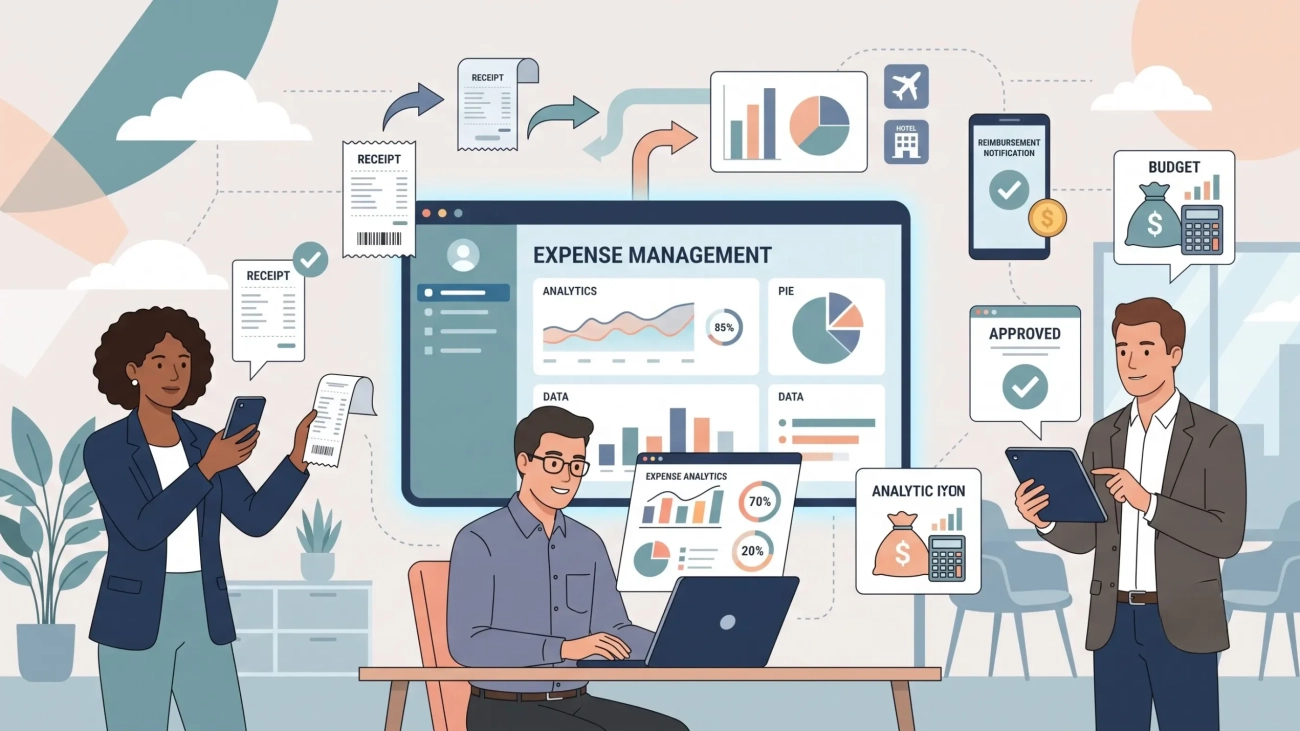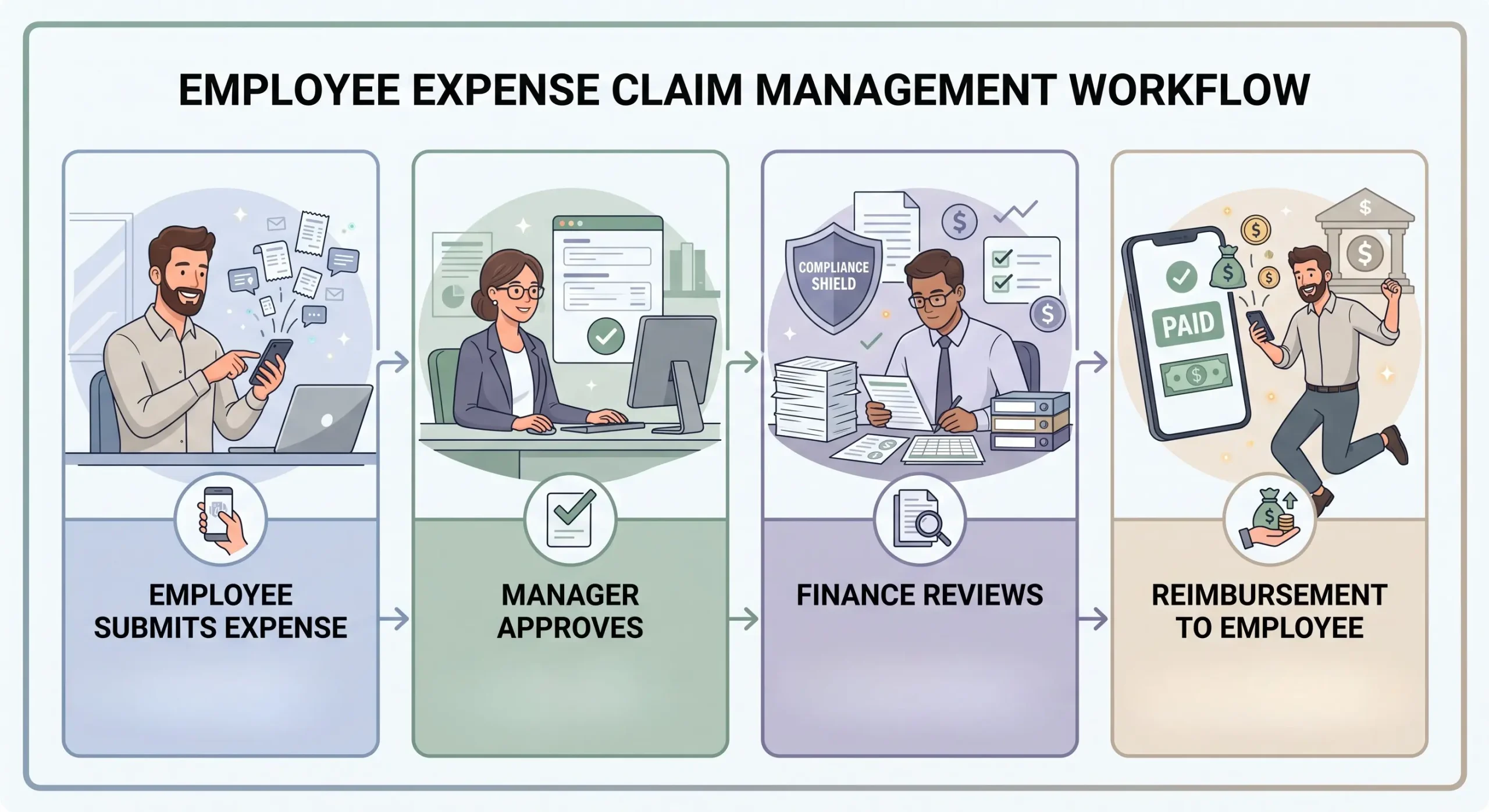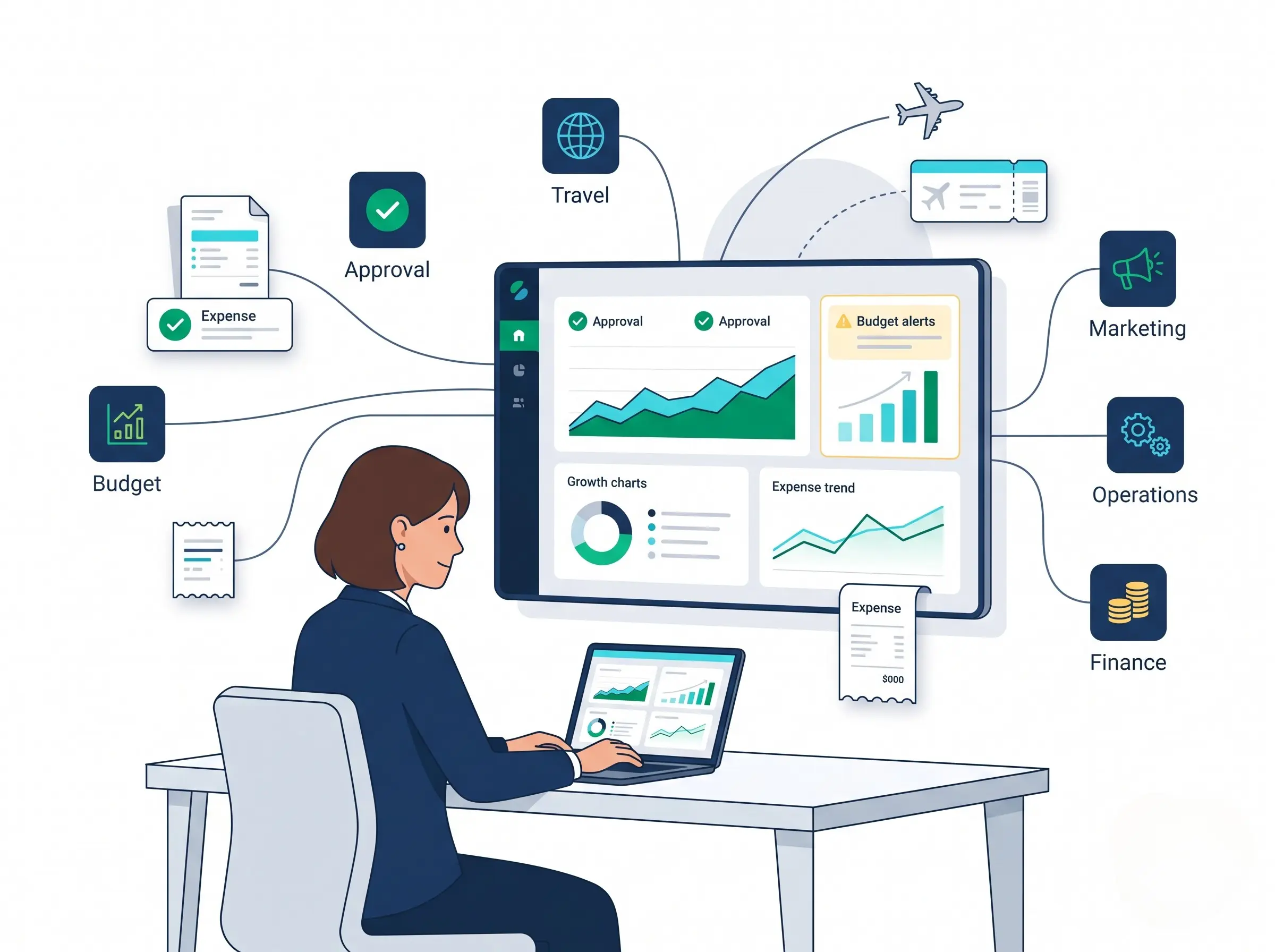

the link between expense delays and employee dissatisfaction

The Link Between Expense Delays and Employee Dissatisfaction

Introduction

Imagine paying for a business trip with your own money, submitting an expense claim, and then waiting weeks for reimbursement. During that time, you’re following up with finance, searching for missing receipts, and wondering when the payment will finally arrive. Unfortunately, this isn’t an uncommon experience for many employees.

While delayed expense reimbursements may seem like a minor operational issue, they can have a significant impact on employee satisfaction, productivity, and trust. Employees who regularly face reimbursement delays often feel undervalued, especially when they’re covering business expenses out of their own pockets.

This is why organizations are investing in modern travel and expense management solutions and adopting an intelligent expense reporting platform. These technologies streamline the reimbursement process, improve transparency, and create a better experience for both employees and finance teams.

In this article, we’ll explore how expense delays affect employee morale, the business costs of inefficient reimbursement processes, and practical ways organizations can eliminate delays through automation.

Why Timely Expense Reimbursement Matters

Expense reimbursement isn’t just a finance function. It’s an important part of the overall employee experience.

Employees often pay for business-related expenses such as:

  • Flight tickets
  • Hotel stays
  • Local transportation
  • Client meals
  • Office supplies
  • Conference registrations

When reimbursements are processed quickly, employees feel supported and confident that the organization values their contributions. However, repeated delays can create frustration and reduce trust in internal processes.

Timely reimbursements also improve financial well-being, especially for employees who frequently travel for work or manage large client-facing responsibilities.

How Expense Delays Affect Employee Satisfaction

Delayed reimbursements have consequences that extend far beyond finance. They influence how employees perceive the organization and their day-to-day work experience.

Financial Stress

Not every employee has the flexibility to cover business expenses for extended periods.

Waiting several weeks for reimbursement can strain personal finances, particularly when travel costs include flights, hotels, or client entertainment.

Over time, this financial pressure can negatively affect motivation and engagement.

Reduced Trust in the Organization

Employees expect companies to honor legitimate business expenses promptly.

When claims remain pending without updates, employees may feel that their concerns are not a priority. Lack of communication often creates more frustration than the delay itself.

A transparent reimbursement process helps build confidence between employees and finance teams.

Lower Productivity

Employees should focus on their work, not on following up about expense claims.

Manual reimbursement processes often require employees to:

  • Send multiple reminder emails
  • Contact finance teams for updates
  • Search for missing receipts
  • Correct claim errors
  • Resubmit documentation

These unnecessary tasks reduce productivity and consume valuable working hours.

Declining Employee Engagement

Small operational issues can significantly influence workplace satisfaction.

Repeated reimbursement delays create negative experiences that affect employee morale, particularly for sales teams, consultants, and frequent business travelers.

Organizations with efficient reimbursement systems often report stronger employee satisfaction and better retention.

Why Expense Delays Happen

Many reimbursement challenges originate from outdated processes rather than employee mistakes.

Manual Expense Reporting

Paper forms, spreadsheets, and email approvals create unnecessary delays.

Finance teams spend considerable time reviewing claims manually, increasing processing time and the likelihood of errors.

Slow Approval Workflows

Expense reports frequently pass through multiple approval levels.

If even one approver is unavailable, the entire reimbursement process comes to a standstill.

Without automated reminders or escalation workflows, approvals can remain pending for days or weeks.

Missing or Incorrect Documentation

Employees sometimes forget receipts or enter incorrect information.

Finance teams must request additional documentation before processing payments, extending reimbursement timelines.

Limited Visibility

One of the biggest frustrations for employees is not knowing the status of their claims.

Without a centralized tracking system, employees often contact finance teams simply to ask whether their reimbursement has been approved.

The Business Impact of Delayed Expense Reimbursements

Expense delays don’t just affect employees. They also create measurable business challenges.

Increased Administrative Work

Finance teams spend significant time answering reimbursement queries instead of focusing on strategic financial planning.

Automated processes reduce repetitive administrative tasks and improve overall efficiency.

Higher Risk of Errors

Manual processes increase the likelihood of:

  • Duplicate claims
  • Data entry mistakes
  • Missing receipts
  • Incorrect reimbursements
  • Compliance issues

These errors can become costly during audits or financial reporting.

Employee Retention Challenges

Although reimbursement delays alone may not cause employees to leave, they contribute to a poor workplace experience.

Combined with other operational frustrations, slow reimbursements can reduce employee loyalty over time.

Poor Financial Visibility

Delayed expense processing also affects management.

If expense reports are submitted weeks after spending occurs, finance teams lose real-time visibility into organizational costs, making budgeting and forecasting less accurate.

How Travel and Expense Management Solves These Challenges

Modern travel and expense management software automates the entire expense lifecycle, reducing delays while improving accuracy.

Faster Expense Submission

Employees can submit claims immediately using mobile devices.

Instead of collecting paper receipts, they simply photograph receipts and upload them directly into the system.

This speeds up reporting while reducing lost documentation.

Automated Approval Workflows

Expense reports are automatically routed to the appropriate managers based on company policies.

Approvers receive instant notifications, helping reduce approval bottlenecks.

Automated escalation rules ensure pending claims continue moving through the process.

Real-Time Expense Tracking

Employees can view the status of every claim without contacting finance.

Typical tracking stages include:

  • Submitted
  • Under review
  • Approved
  • Reimbursement scheduled
  • Payment completed

This transparency reduces uncertainty and improves employee confidence.

Built-In Policy Compliance

Travel and expense management systems automatically check claims against company policies.

Potential issues such as duplicate expenses, missing receipts, or spending limit violations are flagged before reaching finance teams.

This reduces manual reviews and accelerates reimbursements.
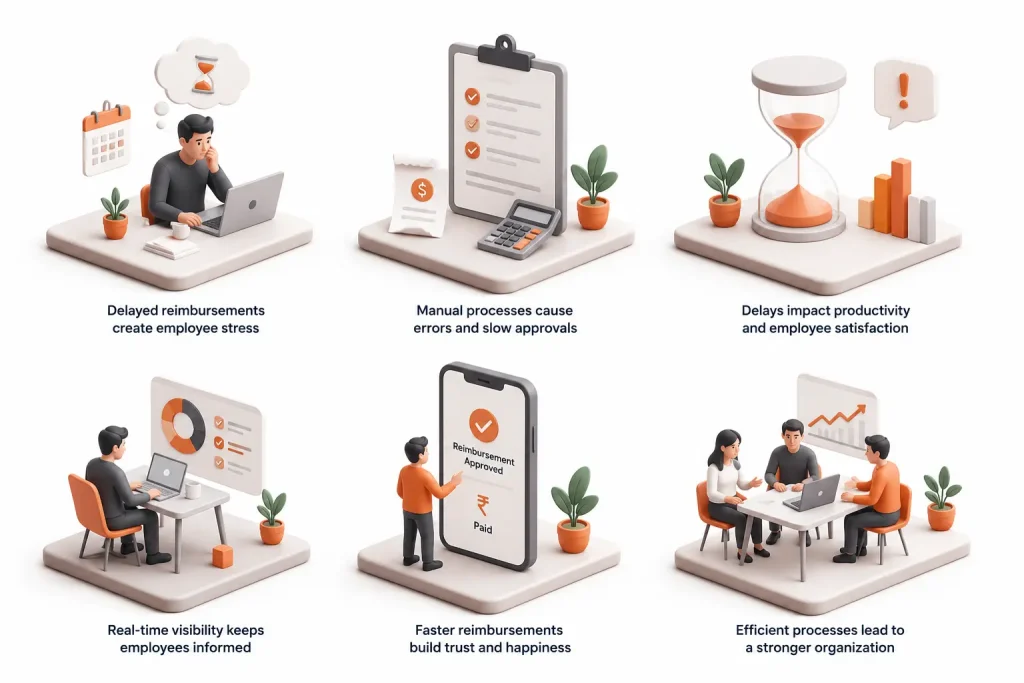
why an expense reporting platform improves employee experience

Why an Expense Reporting Platform Improves Employee Experience

An advanced expense reporting platform benefits both employees and finance departments.

Mobile Accessibility

Employees can submit expenses from anywhere, making reporting convenient during business travel.

Automated Receipt Management

Digital receipt capture eliminates paperwork and reduces missing documentation.

Faster Reimbursements

Automation shortens approval cycles, allowing employees to receive payments much sooner.

Better Reporting

Finance leaders gain access to dashboards showing:

  • Outstanding claims
  • Average reimbursement time
  • Department-wise expenses
  • Policy violations
  • Spending trends

These insights help improve financial planning while ensuring a better employee experience.

Best Practices for Reducing Expense Delays

Organizations looking to improve reimbursement processes should consider the following strategies.

Digitize Expense Reporting

Replace spreadsheets and paper forms with a centralized expense reporting platform.

Simplify Approval Processes

Reduce unnecessary approval layers while automating routing and reminders.

Define Clear Expense Policies

Employees should understand:

  • Eligible expenses
  • Spending limits
  • Receipt requirements
  • Submission deadlines

Clear policies reduce errors and speed up approvals.

Encourage Prompt Expense Submission

Employees should submit expenses immediately after travel rather than waiting until the end of the month.

This keeps financial records accurate and improves cash flow visibility.

Monitor Reimbursement Performance

Track key metrics such as:

  • Average reimbursement time
  • Pending claims
  • Approval turnaround
  • Policy compliance rate

Continuous monitoring helps identify process improvements.

Conclusion

Expense reimbursements are more than an administrative task—they directly influence employee satisfaction, trust, and productivity. When employees experience long reimbursement delays, they often feel frustrated, financially burdened, and less engaged at work.

By investing in modern travel and expense management software and implementing a reliable expense reporting platform, organizations can simplify expense reporting, automate approvals, improve financial visibility, and ensure employees are reimbursed quickly and accurately.

A faster, more transparent reimbursement process benefits everyone. Employees spend less time chasing payments, finance teams reduce administrative workloads, and businesses build a stronger culture of trust and accountability.

Frequently Asked Questions

Why do expense reimbursement delays affect employee satisfaction?

Delayed reimbursements create financial stress, reduce trust in the organization, and force employees to spend extra time following up on payments instead of focusing on their work.

What is travel and expense management?

Travel and expense management is the process of managing business travel bookings, expense claims, approvals, reimbursements, and policy compliance through a centralized system.

How does an expense reporting platform improve reimbursements?

An expense reporting platform automates expense submission, approval workflows, receipt management, and reimbursement tracking, significantly reducing processing times.

What causes reimbursement delays?

Common reasons include manual approvals, missing receipts, outdated reporting systems, multiple approval levels, and limited visibility into claim status.

How can businesses reduce expense processing time?

Businesses can reduce delays by digitizing expense reporting, automating approvals, implementing clear expense policies, and using real-time expense tracking tools.

Ready to Eliminate Expense Delays?

Don’t let slow reimbursements impact employee morale or create unnecessary administrative work. With ExpenseOut’s intelligent travel and expense management solution, your business can automate expense reporting, accelerate approvals, improve policy compliance, and provide employees with a seamless reimbursement experience.

Book a personalized demo today to see how ExpenseOut can help your organization simplify expense management, improve employee satisfaction, and give your finance team complete control over every business expense.

the role of expense analytics in strategic budget planning

The Role of Expense Analytics in Strategic Budget Planning

Introduction

Creating a budget is easy. Sticking to it is the real challenge.

Many businesses carefully allocate funds at the beginning of the financial year, only to discover months later that departments have exceeded budgets, expenses have risen unexpectedly, and forecasting has become increasingly difficult. The problem isn’t always overspending—it’s often a lack of visibility into where money is going.

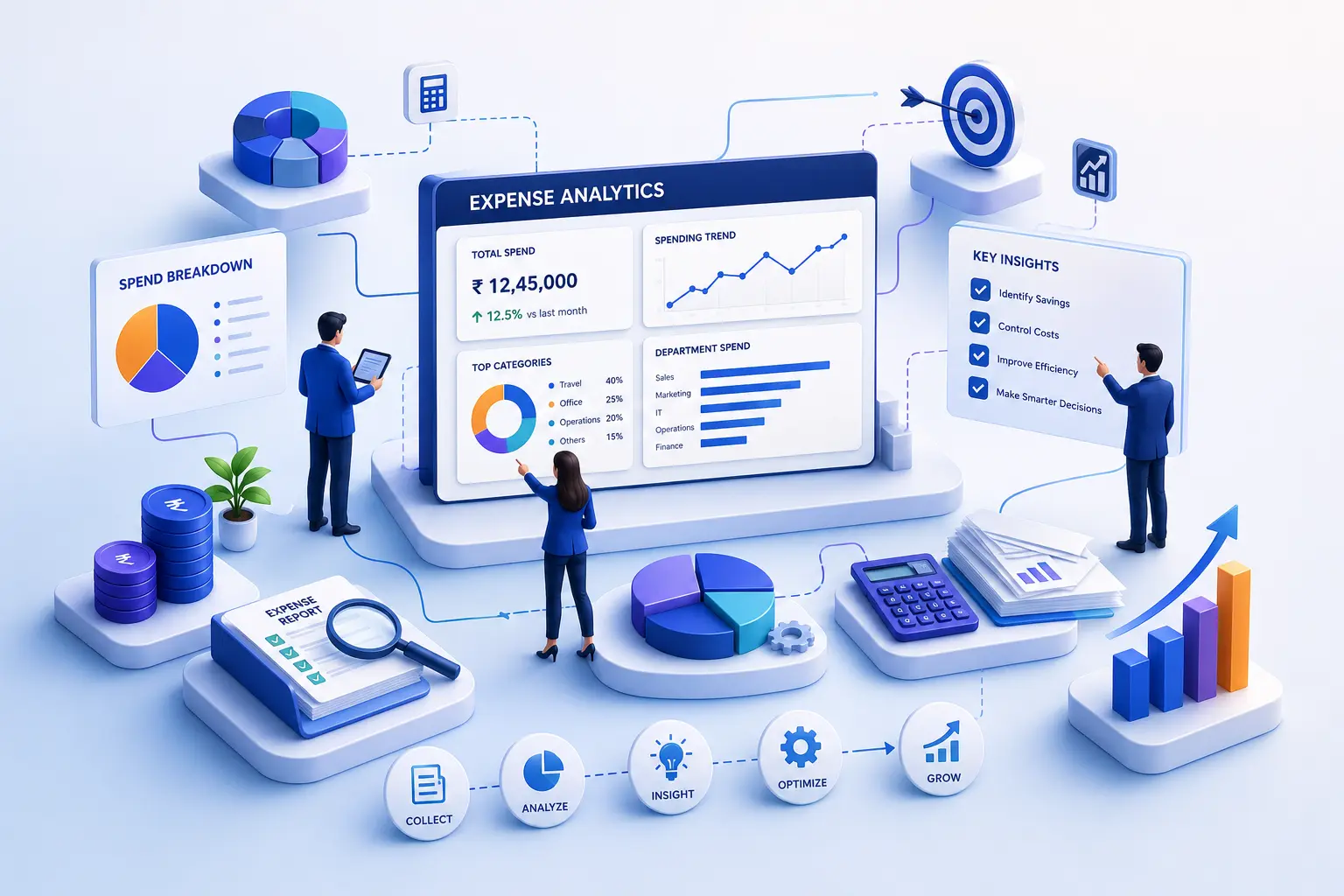
This is where expense analytics plays a crucial role. Instead of relying on spreadsheets and month-end reports, businesses can analyze spending in real time, identify cost-saving opportunities, and make informed financial decisions before small issues become major budget concerns.

When paired with modern finance reporting tools and a reliable corporate finance solution, expense analytics helps finance teams improve budgeting accuracy, strengthen financial control, and support long-term business growth. In this guide, we’ll explore how expense analytics contributes to strategic budget planning and why it’s becoming an essential part of modern financial management.

What Is Expense Analytics?

Expense analytics is the process of collecting, organizing, and analyzing business spending data to understand how money is being used across an organization. Rather than simply recording expenses for accounting purposes, it helps finance teams identify trends, monitor budgets, and uncover opportunities to optimize spending.

Expense analytics can answer important questions such as:

  • Which departments spend the most?
  • Are employee expenses increasing month over month?
  • Which vendors account for the highest costs?
  • Are there recurring expenses that can be reduced?
  • How closely is actual spending aligned with the planned budget?

These insights enable finance leaders to make proactive decisions instead of reacting after budgets have already been exceeded.

Why Expense Analytics Matters for Strategic Budget Planning

A budget should be more than a yearly financial document. It should be a dynamic plan that adapts to changing business conditions.

Expense analytics provides the data needed to make budgeting more accurate and responsive.

Improves Budget Accuracy

Budgets built on assumptions often miss the mark. By analyzing historical spending patterns, finance teams can estimate future expenses more realistically.

Reviewing previous travel costs, procurement expenses, employee reimbursements, and operational spending helps create budgets based on actual business performance rather than guesswork.

Detects Overspending Early

Real-time expense monitoring allows organizations to identify unusual spending before it becomes a significant financial issue.

Whether it’s unexpected travel costs, duplicate expense claims, or departments approaching their spending limits, early visibility enables quick corrective action.

Strengthens Financial Forecasting

Accurate forecasting depends on reliable data. Expense analytics identifies seasonal spending trends, recurring expenses, and growth patterns that improve financial projections.

This allows businesses to prepare for future costs with greater confidence.

Key Benefits of Expense Analytics

Complete Spending Visibility

Business expenses are often spread across multiple systems, making it difficult to obtain a complete financial picture.

Expense analytics consolidates data from:

  • Employee expense claims
  • Corporate travel
  • Vendor payments
  • Procurement systems
  • Accounting software

A centralized view allows finance teams to monitor spending across the entire organization from one dashboard.

Better Decision-Making

Reliable financial data leads to better business decisions.

Instead of applying blanket budget cuts across all departments, finance leaders can identify areas that genuinely require cost optimization while continuing to invest in high-performing teams and strategic initiatives.

Improved Cost Control

Expense analytics helps businesses identify unnecessary spending, including:

  • Duplicate software subscriptions
  • Unused vendor contracts
  • Out-of-policy purchases
  • Frequent last-minute travel bookings
  • Excessive reimbursement claims

Addressing these issues can generate meaningful cost savings without affecting business operations.

Enhanced Compliance

Expense policies are easier to enforce when spending is monitored continuously.

Finance teams can quickly identify policy violations, missing receipts, duplicate claims, and unauthorized purchases, reducing compliance risks and simplifying audits.

Important Metrics Every Finance Team Should Monitor

Tracking the right metrics helps organizations make smarter budgeting decisions.

Budget Variance

Budget variance measures the difference between planned and actual spending.

Regularly reviewing this metric helps finance teams identify departments or projects that consistently exceed budgets and investigate the reasons behind those variances.

Department-Wise Spending

Monitoring spending by department improves accountability and helps identify where budgets are being used effectively.

It also supports more accurate budget allocation during future planning cycles.

Expense Categories

Analyzing expenses by category, such as travel, software, marketing, utilities, and employee reimbursements, highlights areas where spending is increasing faster than expected.

Vendor Spending

Vendor analysis reveals which suppliers account for the largest share of expenses and identifies opportunities to negotiate better contracts or consolidate vendors.

How Finance Reporting Tools Support Expense Analytics

Expense analytics becomes significantly more valuable when supported by modern finance reporting tools.

Instead of manually preparing monthly reports, finance teams receive automated dashboards and real-time financial insights that improve decision-making.

Some of the most valuable capabilities include:

Automated Reporting

Finance reporting tools automatically generate reports for budgets, expenses, reimbursements, vendor spending, and departmental performance.

Automation saves time while reducing manual errors.

Real-Time Dashboards

Interactive dashboards provide instant visibility into:

  • Current spending
  • Budget utilization
  • Expense trends
  • Department performance
  • Financial summaries

Decision-makers no longer need to wait until month-end to understand the organization’s financial position.

Faster Financial Reviews

Rather than collecting data from multiple spreadsheets, finance teams can review consolidated reports within minutes.

This enables quicker responses to unexpected spending changes.

why businesses need a corporate finance solution

Why Businesses Need a Corporate Finance Solution

Expense analytics delivers the best results when integrated into a comprehensive corporate finance solution.

Instead of managing budgeting, expense reporting, approvals, and financial reporting through disconnected systems, organizations benefit from a single platform that brings financial data together.

A modern corporate finance solution typically includes:

  • Expense management
  • Budget planning
  • Approval workflows
  • Financial reporting
  • Analytics dashboards
  • Policy compliance monitoring
  • Travel and reimbursement management

This unified approach improves collaboration between finance, procurement, HR, and business leaders while ensuring everyone works from the same financial data.

Best Practices for Effective Expense Analytics

Businesses can maximize the value of expense analytics by following these practical strategies.

Standardize Expense Categories

Use consistent categories across all departments to improve reporting accuracy and simplify analysis.

Monitor Spending Regularly

Review expenses weekly or monthly instead of waiting until quarterly or annual budget reviews.

Frequent monitoring helps identify problems before they affect financial performance.

Set Automated Alerts

Configure notifications for:

  • Budget thresholds
  • Policy violations
  • High-value transactions
  • Unusual spending patterns

Automation allows finance teams to respond immediately.

Use Historical Data

Past spending trends provide valuable context for future budget planning and forecasting.

Historical analysis reduces reliance on assumptions.

Promote Cross-Department Collaboration

Budget planning should involve department managers as well as finance teams.

When business units understand their spending patterns, they become more accountable for budget performance.

The Future of Expense Analytics

As finance technology evolves, expense analytics is becoming more intelligent and predictive.

Businesses are increasingly adopting solutions that offer:

  • AI-powered spending insights
  • Predictive budget forecasting
  • Automated anomaly detection
  • Smart policy enforcement
  • Real-time executive dashboards

These capabilities enable finance teams to shift from reactive reporting to proactive financial planning.

Organizations that embrace data-driven budgeting will be better positioned to control costs, improve profitability, and adapt to changing business conditions.

Conclusion

Strategic budget planning requires more than setting annual spending limits. It demands continuous visibility into business expenses, accurate forecasting, and timely financial insights.

Expense analytics empowers organizations to understand spending patterns, identify savings opportunities, improve compliance, and make informed budgeting decisions. Combined with advanced finance reporting tools and a comprehensive corporate finance solution, businesses can streamline financial operations while building stronger, more resilient budgets.

Companies that leverage expense analytics today will be better prepared to make confident financial decisions tomorrow.

Frequently Asked Questions

What is expense analytics?

Expense analytics is the process of analyzing business spending data to identify trends, improve budgeting, reduce unnecessary costs, and support better financial decision-making.

How do finance reporting tools improve budgeting?

Finance reporting tools automate report generation, provide real-time financial dashboards, reduce manual work, and help businesses monitor budgets more accurately.

Why is expense analytics important for strategic planning?

Expense analytics provides valuable insights into spending behavior, helping organizations forecast accurately, optimize budgets, and make data-driven financial decisions.

What should a corporate finance solution include?

A corporate finance solution should offer expense management, budgeting, reporting, analytics, approval workflows, compliance tracking, and integration with accounting systems.

Can small businesses benefit from expense analytics?

Yes. Small and growing businesses can improve cash flow management, reduce unnecessary expenses, strengthen financial control, and make smarter budgeting decisions using expense analytics.

Ready to take control of your business spending?

Turn expense data into smarter budgeting decisions with real-time visibility and actionable insights.

Book a Demo Today and discover a smarter way to manage, analyze, and optimize your business expenses.

This CTA aligns with the blog’s core message around using expense analytics for better budgeting, cost control, and financial decision-making.


how travel expense analytics helps reduce operational costs

How Travel Expense Analytics Helps Reduce Operational Costs

Business travel is essential for growth, client relationships, and market expansion, but it also generates significant operational expenses. Airfare, hotels, meals, transportation, and other travel costs can quickly add up. While many organizations focus on reducing booking costs, they often overlook a bigger opportunity: understanding where and how travel money is being spent.

Without clear visibility into travel expenses, businesses struggle to identify unnecessary spending, reimbursement delays, policy violations, and inefficient processes. These hidden inefficiencies gradually increase operational costs and consume valuable time for both employees and finance teams.

Travel expense analytics helps organizations turn expense data into actionable insights. Combined with enterprise finance software and a modern spend visibility platform, businesses can monitor spending, improve compliance, accelerate reimbursements, and make smarter financial decisions.

In this blog, we’ll explore how travel expense analytics reduces operational costs, the common challenges organizations face, and best practices for improving travel and expense management.

Common Challenges in Travel and Expense Management

Many organizations still rely on manual processes that create unnecessary costs and inefficiencies.

Manual Expense Reporting

Employees often submit expenses using spreadsheets or paper forms, requiring finance teams to manually review every report. This increases administrative work, creates data entry errors, and delays approvals.

Delayed Expense Reimbursements

Employees frequently wait days or weeks to receive reimbursements because of multiple approval stages, missing documentation, or manual verification. Slow reimbursements affect employee satisfaction and reduce productivity.

Receipt Management Issues

Receipt management remains one of the biggest challenges in expense management.

Common problems include:

  • Lost paper receipts
  • Missing invoices
  • Duplicate submissions
  • Manual receipt verification
  • Poor document storage
  • Difficult audit preparation

These issues increase processing time and create additional work for finance teams.

Limited Spend Visibility

When expense data is spread across multiple systems, finance leaders struggle to identify:

  • Departments exceeding budgets
  • Vendor spending patterns
  • Rising travel costs
  • Opportunities to reduce expenses

Without centralized reporting, informed financial decisions become difficult.

Policy Compliance Challenges

Employees may unintentionally violate company travel policies due to unclear guidelines or inconsistent enforcement. Out-of-policy bookings, duplicate claims, and unsupported expenses increase costs while delaying reimbursements.

What Is Travel Expense Analytics?

Travel expense analytics is the process of collecting, analyzing, and visualizing travel expense data to improve financial decision-making.

Instead of simply recording expenses, analytics helps businesses understand spending behavior and identify opportunities for improvement.

Organizations can monitor:

  • Department-wise travel costs
  • Vendor performance
  • Travel spending trends
  • Policy compliance
  • Reimbursement timelines
  • Budget utilization

This allows finance teams to move from reactive reporting to proactive cost management.

How Travel Expense Analytics Reduces Operational Costs

Improves Spend Visibility

A spend visibility platform provides a centralized view of travel expenses across the organization.

Finance teams can monitor spending in real time instead of waiting for month-end reports. This visibility helps identify overspending, track budgets, and improve financial planning.

Identifies Cost-Saving Opportunities

Expense analytics highlights patterns that are difficult to detect manually.

Businesses can identify:

  • Frequently booked expensive hotels
  • High-cost travel routes
  • Repeated last-minute bookings
  • Non-preferred vendors
  • Excessive meal expenses

Addressing these issues can generate significant long-term savings.

Speeds Up Expense Reimbursements

Analytics helps organizations identify delays within reimbursement workflows.

Finance teams can measure:

  • Average approval time
  • Processing delays
  • Reports requiring corrections
  • Outstanding reimbursements

Improving these processes reduces employee frustration while increasing operational efficiency.

Improves Budget Planning

Historical expense data provides valuable insights for future planning.

Businesses can:

  • Forecast travel budgets
  • Allocate spending by department
  • Identify seasonal travel trends
  • Improve cash flow planning

More accurate forecasting leads to better financial control.

Strengthens Policy Compliance

Travel expense analytics automatically identifies out-of-policy spending before reimbursements are processed.

Examples include:

  • Hotel bookings exceeding limits
  • Duplicate expense claims
  • Missing receipts
  • Unsupported expenses

Early detection reduces unnecessary spending and strengthens financial governance.

The Role of Enterprise Finance Software

While analytics provides valuable insights, enterprise finance software enables businesses to act on those insights efficiently.

Modern finance platforms combine:

  • Expense reporting
  • Budget management
  • Approval workflows
  • Financial reporting
  • Travel expense tracking
  • Reimbursement management

Instead of using disconnected tools, organizations gain complete control over travel-related spending from a single platform.

Why Spend Visibility Matters

As businesses grow, managing travel expenses becomes more complex.

A spend visibility platform helps organizations:

  • Monitor expenses across departments
  • Compare spending trends
  • Track travel budgets
  • Identify savings opportunities
  • Improve financial accountability

Greater visibility enables better decision-making and reduces unnecessary operational costs.

best practices for smarter travel expense management

Best Practices for Smarter Travel Expense Management

Organizations can maximize the benefits of travel expense analytics by following these best practices.

Digitize Receipt Management

Encourage employees to capture receipts digitally using mobile devices. Digital records improve audit readiness, reduce lost receipts, and simplify expense verification.

Automate Expense Reporting

Replacing spreadsheets with automated expense reporting reduces manual work, improves accuracy, and accelerates approvals.

Standardize Expense Policies

Clear, accessible policies help employees submit compliant expense reports while reducing rejected claims.

Integrate Travel and Expense Systems

Connecting travel booking with expense reporting eliminates duplicate data entry and improves reporting accuracy.

Review Expense Analytics Regularly

Monthly reviews of travel spending help organizations identify trends, monitor budgets, and implement cost-saving measures before expenses increase.

Signs Your Business Needs Better Expense Management

Your organization should consider modern travel expense analytics if:

  • Travel spending continues to increase without explanation.
  • Employees regularly experience reimbursement delays.
  • Finance teams rely on spreadsheets.
  • Lost receipts are common.
  • Expense approvals take too long.
  • Budget forecasting is inaccurate.
  • Spending reports lack meaningful insights.

These challenges often indicate that manual processes are limiting financial efficiency.

Benefits Beyond Cost Savings

Travel expense analytics delivers value across the organization.

For Employees

  • Faster reimbursements
  • Less paperwork
  • Improved expense tracking
  • Better visibility into claim status

For Finance Teams

  • Reduced manual work
  • Improved compliance
  • Easier audits
  • Better financial reporting

For Business Leaders

  • Greater spending visibility
  • Smarter budgeting
  • Better financial planning
  • Reduced operational costs

Frequently Asked Questions

What is travel expense analytics?

Travel expense analytics helps businesses analyze travel spending, monitor compliance, identify cost-saving opportunities, and improve financial decision-making.

How does enterprise finance software improve travel expense management?

Enterprise finance software automates expense reporting, approvals, reimbursements, budgeting, and reporting while providing centralized control over company spending.

What is a spend visibility platform?

A spend visibility platform gives businesses a real-time view of organizational spending, helping finance teams monitor budgets and identify opportunities to reduce costs.

Why is receipt management important?

Digital receipt management reduces lost documents, speeds up reimbursements, improves audit readiness, and increases reporting accuracy.

How can businesses reduce travel expenses?

Businesses can reduce travel expenses by using travel expense analytics, automating expense reporting, enforcing travel policies, digitizing receipt management, and monitoring spending trends.

Conclusion

Reducing operational costs requires more than negotiating lower travel rates. Organizations need complete visibility into how travel expenses are managed across every stage of the process.

Manual expense reporting, delayed reimbursements, receipt management issues, and limited spending visibility create hidden costs that affect both employees and finance teams. Travel expense analytics helps uncover these inefficiencies and provides the insights needed to improve financial performance.

By combining travel expense analytics with modern enterprise finance software and a comprehensive spend visibility platform, businesses can reduce operational costs, improve compliance, accelerate reimbursements, and make more informed financial decisions.

Ready to Optimize Your Travel Spending?

If your organization still relies on spreadsheets or manual expense processes, now is the perfect time to modernize. ExpenseOut helps businesses automate expense reporting, simplify receipt management, improve spend visibility, and gain real-time analytics for smarter financial decisions.

Book a demo today to discover how ExpenseOut can help your business reduce operational costs and transform travel expense management.

reducing employee burnout through better expense processes

Reducing Employee Burnout Through Better Expense Processes

Employee burnout isn’t always caused by long hours or demanding workloads. Sometimes, it’s the everyday administrative tasks that slowly wear employees down. One of the biggest yet often overlooked contributors is the expense reporting process.

After a business trip, employees often spend hours organizing receipts, filling out spreadsheets, following up on approvals, and waiting weeks for reimbursement. While these tasks may seem minor individually, they add up over time, creating frustration, reducing productivity, and impacting employee satisfaction.

Modern businesses are rethinking travel and expense management by investing in expense analytics software and expense reporting software. These solutions simplify expense reporting, automate reimbursements, improve receipt management, and provide valuable spending insights.

In this guide, we’ll explore how inefficient expense processes contribute to burnout, the common challenges organizations face, and practical ways to create a smoother expense management experience.

How Expense Management Contributes to Employee Burnout

Expense reporting affects employees across departments, especially those who travel frequently for client meetings, conferences, or business visits.

When the process is manual and time-consuming, employees often deal with:

  • Hours spent preparing expense reports
  • Lost or damaged receipts
  • Delayed reimbursements
  • Multiple approval follow-ups
  • Unclear expense policies
  • Repetitive data entry

Instead of focusing on meaningful work, employees spend valuable time completing administrative tasks. Over time, this leads to frustration, reduced engagement, and lower productivity.

Common Challenges in Travel and Expense Management

Many businesses still rely on outdated processes that create unnecessary workload for both employees and finance teams.

1. Manual Expense Reporting

Manual expense reports require employees to enter every transaction, attach receipts, and categorize expenses individually. This increases the chances of errors, duplicate entries, and missing information while slowing down approvals.

2. Delayed Expense Reimbursements

Employees often wait days or even weeks to receive reimbursement because of multiple approval stages, missing documents, or manual verification. Delayed payments can create financial stress, particularly for employees who travel frequently.

3. Receipt Management Issues

Receipt management remains one of the biggest pain points in expense management.

Common issues include:

  • Lost paper receipts
  • Faded receipts
  • Missing invoices
  • Duplicate submissions
  • Manual receipt verification
  • Difficulty storing records for audits

Poor receipt management increases processing time and creates additional work for finance teams.

4. Limited Visibility into Spending

Without centralized expense data, businesses struggle to understand:

  • Which departments spend the most
  • Where travel costs are increasing
  • Vendor spending patterns
  • Areas where expenses can be reduced

This lack of visibility makes cost control difficult.

5. Policy Compliance Challenges

Employees may unintentionally submit expenses that don’t comply with company policies due to unclear guidelines or inconsistent enforcement. This results in rejected claims, additional reviews, and reimbursement delays.

How Better Expense Processes Reduce Burnout

Improving expense management is about removing unnecessary friction from employees’ daily work.

Automate Expense Capture

Modern expense reporting software allows employees to capture receipts instantly using a mobile app. The software automatically extracts key information such as merchant name, amount, date, and tax details, eliminating manual data entry.

Simplify Expense Submission

Instead of filling out spreadsheets, employees can submit complete expense reports within minutes. Built-in policy checks help identify issues before submission, reducing corrections later.

Accelerate Approvals

Automated approval workflows send reports directly to the appropriate manager. Notifications and reminders help reduce delays, ensuring faster processing.

Speed Up Expense Reimbursements

Faster approvals mean quicker reimbursements, reducing financial stress and improving employee satisfaction. Employees spend less time tracking payment status and more time focusing on their work.

The Role of Expense Analytics Software

While automation improves efficiency, expense analytics software helps organizations make smarter financial decisions.

It provides real-time insights into spending trends, enabling finance teams to identify opportunities for savings and improve policy compliance.

Expense analytics helps businesses:

  • Monitor departmental spending
  • Identify policy violations
  • Detect duplicate claims
  • Track reimbursement timelines
  • Analyze travel expenses
  • Improve budgeting and forecasting

Instead of reacting to overspending, organizations can proactively control costs.

Best Practices for Smarter Expense Management

Businesses looking to reduce employee burnout should combine technology with better processes.

Create Clear Expense Policies

Employees should have easy access to simple, well-defined expense policies. Clear guidelines reduce confusion and minimize rejected claims.

Digitize Receipt Management

Replacing paper receipts with digital storage improves record keeping, simplifies audits, and reduces lost documentation.

Automate Approval Workflows

Automated routing eliminates manual follow-ups and ensures expense reports reach the right approver quickly.

Provide Real-Time Status Updates

Employees should be able to track the progress of their expense reports and reimbursements without contacting finance teams.

Integrate Travel and Expense Systems

Connecting travel booking with expense management eliminates duplicate data entry and improves reporting accuracy.

signs your business needs better expense reporting software

Signs Your Business Needs Better Expense Reporting Software

Your organization may benefit from modern expense reporting software if:

  • Employees frequently complain about reimbursement delays.
  • Expense reports are created using spreadsheets.
  • Lost receipts are common.
  • Finance teams spend excessive time reviewing reports.
  • Approvals require repeated follow-ups.
  • Audits take too long to complete.
  • Spending trends are difficult to analyze.

These challenges often indicate that manual processes are limiting efficiency and affecting employee experience.

Benefits Beyond Reducing Burnout

Modern expense management solutions create value across the organization.

For Employees

  • Less administrative work
  • Faster reimbursements
  • Better visibility into claim status
  • Reduced financial stress
  • Improved job satisfaction

For Finance Teams

  • Faster processing
  • Better compliance
  • Reduced manual effort
  • Improved reporting
  • Easier audits

For Business Leaders

  • Greater spending visibility
  • Better budget control
  • Data-driven decision making
  • Stronger financial governance
  • Improved operational efficiency

Frequently Asked Questions

What is expense analytics software?

Expense analytics software helps businesses analyze employee spending, monitor budgets, identify trends, and improve financial decision-making using expense data.

How does expense reporting software reduce employee burnout?

It automates expense submission, receipt capture, approvals, and reimbursements, reducing administrative work and saving employees valuable time.

What are the biggest challenges in travel and expense management?

The most common challenges include manual expense reporting, delayed reimbursements, receipt management issues, poor visibility into spending, and policy compliance problems.

Why is receipt management important?

Effective receipt management reduces errors, simplifies audits, speeds up reimbursements, and ensures expenses are properly documented.

How can businesses improve expense reimbursements?

By automating approval workflows, digitizing receipts, simplifying expense reporting, and implementing modern expense management software.

Conclusion

Employee burnout isn’t always caused by demanding projects. Often, it’s the repetitive administrative tasks that create unnecessary stress and reduce productivity. Manual expense reporting, delayed reimbursements, and inefficient receipt management can negatively impact both employees and finance teams.

By adopting modern expense analytics software and expense reporting software, businesses can streamline travel and expense management, automate routine tasks, improve visibility into spending, and deliver faster reimbursements. The result is a more efficient finance process and a better employee experience.

Ready to Transform Your Expense Management?

If your organization is still relying on spreadsheets, paper receipts, or slow approval workflows, now is the time to modernize. ExpenseOut helps businesses automate expense reporting, simplify receipt management, accelerate reimbursements, and gain actionable insights through advanced expense analytics.

Book a demo today and discover how smarter expense management can reduce employee burnout while improving productivity and financial control.

The Startup Founder’s Guide to Expense Control

The Startup Founder’s Guide to Expense Control

Introduction

A startup’s biggest financial challenge isn’t always generating revenue—it’s knowing where the money is going.

Many founders closely track payroll, funding, and customer acquisition costs but overlook day-to-day expenses. Business travel, software subscriptions, employee reimbursements, and operational spending can quietly increase month after month, pushing burn rates higher than expected.

The problem usually isn’t overspending. It’s a lack of visibility.

This guide explores common expense challenges startups face and practical ways to maintain control as your business grows.

Why Expense Control Gets Harder as You Scale

Managing expenses is simple when a startup has a handful of employees. Everyone knows who spent what, and approvals happen quickly.

As teams grow, spending becomes decentralized. Sales teams travel more, departments purchase their own tools, and reimbursement requests increase. Without proper processes, founders can lose sight of where company money is being spent.

Small inefficiencies may seem harmless, but they add up quickly and can affect cash flow, budgeting, and runway.

Common Expense Problems Startup Founders Face

Rising Travel Costs

Travel is often one of the first expenses to grow as startups expand.

Sales meetings, client visits, conferences, and investor meetings can lead to inconsistent spending patterns. Employees may book different airlines, hotels, or transportation options, making costs difficult to track.

Without visibility, travel expenses can exceed budgets before anyone notices.

This is why many growing companies use travel expense automation to simplify reporting and gain better oversight of travel-related spending.

Subscription Sprawl

Most startups accumulate software subscriptions over time.

Different teams adopt tools independently, free trials turn into paid plans, and unused licenses remain active long after they’re needed.

A quarterly review of software expenses often reveals opportunities to reduce unnecessary spending without affecting productivity.

Slow Reimbursements

Manual reimbursement processes create frustration for both employees and finance teams.

Missing receipts, delayed approvals, and email-based workflows can turn a simple reimbursement into a lengthy process.

The longer reimbursements take, the more administrative work is created for everyone involved.

Why Spreadsheets Eventually Become a Problem

Spreadsheets work well in the early stages of a startup.

However, as transaction volumes increase, manual tracking becomes harder to maintain.

Common challenges include:

  • Data entry errors
  • Missing expense records
  • Delayed reporting
  • Multiple spreadsheet versions
  • Limited visibility into real-time spending

When founders can only review expenses after they occur, controlling costs becomes much more difficult.

What Effective Expense Control Looks Like

Expense control isn’t about restricting spending. It’s about making informed decisions.

Create Clear Policies

Employees should know:

  • Which expenses are reimbursable
  • Spending limits
  • Approval requirements
  • Receipt submission expectations

Clear guidelines reduce confusion and improve compliance.

Give Departments Budget Ownership

Department leaders should understand their budgets and be accountable for spending decisions.

This creates greater financial awareness throughout the organization.

Focus on Trends, Not Individual Expenses

Rather than reviewing every transaction, look for patterns.

Ask questions such as:

  • Which departments spend the most?
  • What expenses are increasing?
  • Are travel costs staying within budget?
  • Which subscriptions are underutilized?

Trend analysis often reveals the biggest opportunities for improvement.

How Technology Helps Growing Startups

As startups scale, manual expense management becomes increasingly difficult.

Modern corporate expense software helps businesses:

  • Capture receipts digitally
  • Automate approval workflows
  • Improve expense visibility
  • Track spending in real time
  • Generate accurate reports

Similarly, travel expense automation helps businesses manage travel-related costs more efficiently by reducing manual reporting and improving compliance.

The value isn’t simply automation. It’s having access to accurate financial information when decisions need to be made.

expense categories founders should monitor closely

Expense Categories Founders Should Monitor Closely

Employee Travel

Track:

  • Flights
  • Hotels
  • Transportation
  • Meals
  • Client entertainment

Software and Technology

Review:

  • Active subscriptions
  • License usage
  • Vendor contracts
  • Renewal schedules

Marketing Spend

Monitor:

  • Advertising campaigns
  • Events
  • Sponsorships
  • Agency costs

Operational Expenses

Evaluate:

  • Equipment purchases
  • Office expenses
  • Communication tools
  • Remote work allowances

Regular reviews help identify unnecessary costs before they become significant.

Questions Every Founder Should Ask Monthly

A simple monthly review can reveal spending issues early.

Consider asking:

  • Where did we spend more than expected?
  • Which costs increased this month?
  • Are departments staying within budget?
  • How much are we spending on travel?
  • Are reimbursements being processed efficiently?
  • Are there subscriptions we no longer need?

Consistent reviews help maintain financial discipline without slowing growth.

Conclusion

Most startups don’t struggle because of one major expense. They struggle because small spending leaks go unnoticed over time.

Effective expense control is about visibility, accountability, and better decision-making. By establishing clear policies, monitoring spending trends, and improving expense processes, founders can gain greater control over cash flow and support sustainable growth.

As your startup grows, understanding where every dollar goes becomes just as important as generating the next dollar of revenue.

FAQs

Why is expense control important for startups?

It helps improve cash flow management, extend runway, and prevent unnecessary spending.

What is corporate expense software?

Corporate expense software helps businesses manage expenses, approvals, reimbursements, and reporting through a centralized system.

How does travel expense automation help startups?

It simplifies travel expense reporting, improves visibility, and helps businesses monitor travel-related spending more effectively.

What are the most commonly overlooked startup expenses?

Software subscriptions, travel costs, employee reimbursements, and recurring operational expenses are often overlooked.

How often should startups review expenses?

Most startups benefit from monthly reviews and quarterly assessments of spending trends and budgets.

Take Control of Your Startup Expenses Before They Control Your Growth

As startups scale, managing expenses becomes increasingly complex. What starts as a few reimbursements and software subscriptions can quickly grow into a web of travel costs, recurring payments, approval bottlenecks, and limited spending visibility.

The key is to build strong expense management habits early. By creating clear policies, monitoring spending regularly, and streamlining expense processes, founders can make more informed financial decisions and avoid costly surprises down the road.

If your team is spending too much time managing receipts, approvals, and reimbursements, it may be time to rethink your expense management process. The right systems can help you gain better visibility into company spending, improve efficiency, and focus more of your energy on growing the business.

Looking for a smarter way to manage business expenses and travel spend? Explore how modern expense management solutions can help your startup stay organized, compliant, and financially in control as it scales.

how smart companies are digitizing employee expense claims

How Smart Companies Are Digitizing Employee Expense Claims

Introduction

Employee expense claims may seem like a routine business process, but for many organizations, they represent a significant administrative challenge. Employees often spend valuable time collecting receipts, filling out forms, and following up on approvals, while finance teams struggle with manual verification, compliance checks, and reimbursement processing.

As businesses grow, these challenges become even more difficult to manage. What once worked for a small team can quickly become a bottleneck that slows operations, increases costs, and reduces visibility into company spending.

That’s why smart companies are digitizing employee expense claims. By replacing paper receipts, spreadsheets, and email-based approvals with automated workflows, organizations can simplify expense management, improve compliance, and create a faster, more transparent reimbursement process.

Why Manual Expense Claims Are Holding Businesses Back

Many organizations still rely on traditional expense reporting methods that involve multiple manual steps:

  • Employees collect receipts throughout the month.
  • Expense reports are filled out manually.
  • Managers review and approve claims via email.
  • Finance teams verify documentation.
  • Reimbursements are processed manually.

While this process may appear straightforward, it often creates inefficiencies that affect employees, managers, and finance teams alike.

Some of the most common challenges include:

  • Lost or damaged receipts
  • Delayed approvals
  • Data entry mistakes
  • Duplicate expense claims
  • Limited spending visibility
  • Increased administrative workload

These issues can result in slower reimbursements, frustrated employees, and a lack of control over business expenses. As expense volumes increase, manual processes become increasingly unsustainable.

What Does Expense Claim Digitization Mean?

Expense claim digitization involves replacing manual expense reporting processes with digital tools and automated workflows.

Instead of relying on paper forms and spreadsheets, employees can submit expenses electronically through a centralized platform. Receipts can be captured digitally, approvals can be automated, and expense data can be stored securely in a single location.

Employees can:

  • Upload receipts instantly
  • Submit claims from any device
  • Track approval status in real time
  • Receive reimbursements faster

Meanwhile, finance teams can:

  • Automate expense reviews
  • Monitor spending patterns
  • Enforce company policies
  • Generate reports and analytics
  • Maintain accurate audit records

The result is a more efficient and transparent expense management process that benefits the entire organization.

how smart companies are digitizing expense claims

How Smart Companies Are Digitizing Expense Claims

1. Replacing Paper Receipts with Digital Capture

Paper receipts are one of the biggest sources of expense management frustration. They are easily lost, damaged, or forgotten, creating delays and compliance challenges.

Modern expense management solutions allow employees to capture receipts using their smartphones immediately after making a purchase. This ensures documentation is stored securely and attached directly to the expense claim.

Digital receipt capture improves record accuracy while eliminating the need to store and organize paper receipts.

2. Automating Expense Submission

Traditional expense reports often require employees to manually enter transaction details and complete lengthy forms.

Digitized systems automate much of this process by organizing expense information and simplifying submissions. Employees can submit claims in just a few clicks, reducing administrative effort and saving valuable time.

This streamlined process encourages timely expense reporting and improves data accuracy.

3. Streamlining Approval Workflows

One of the most common causes of reimbursement delays is slow approval workflows.

Manual approval processes often rely on email chains, making it easy for requests to be overlooked or delayed. Smart companies use automated workflows that route claims directly to the appropriate approvers.

Automated reminders and notifications help keep approvals moving, reducing bottlenecks and accelerating reimbursement timelines.

4. Tracking Expenses in Real Time

Many organizations struggle with limited visibility into employee spending.

When expenses are processed manually, finance teams often do not see spending data until weeks after purchases occur. This delay makes budgeting and financial planning more difficult.

Digitized expense management provides real-time visibility into expenses as they are submitted. Finance leaders can monitor spending trends, track departmental budgets, and identify unusual expenses before they become larger issues.

5. Improving Compliance and Policy Enforcement

Expense policy violations are often difficult to detect when claims are reviewed manually.

Automated expense systems can enforce company policies by flagging:

  • Missing receipts
  • Duplicate submissions
  • Out-of-policy expenses
  • Incomplete claims

This proactive approach helps organizations reduce compliance risks while ensuring consistent policy enforcement across all departments.

Benefits of Digitizing Employee Expense Claims

Faster Reimbursements

Employees expect reimbursement processes to be quick and transparent. Automation reduces approval delays and accelerates processing times, helping employees receive reimbursements faster.

Reduced Administrative Work

Finance teams spend less time reviewing paperwork, correcting errors, and manually tracking approvals. This allows them to focus on more strategic financial responsibilities.

Better Accuracy

Automated validation helps reduce common mistakes such as duplicate claims, incorrect expense categories, and missing information.

More accurate expense data supports better financial reporting and decision-making.

Improved Employee Experience

Expense reporting is often viewed as one of the most frustrating administrative tasks within an organization.

A digitized process makes expense submission simpler, faster, and more transparent, improving the overall employee experience.

Greater Financial Visibility

Centralized expense data gives organizations a clearer understanding of where money is being spent.

Finance teams can identify spending trends, monitor budgets, and uncover opportunities for cost savings with greater confidence.

Signs Your Organization Should Digitize Expense Claims

Your company may be ready for expense claim digitization if:

  • Expense approvals consistently take too long
  • Employees frequently lose receipts
  • Reimbursements are often delayed
  • Finance teams spend excessive time processing claims
  • Spending visibility is limited
  • Compliance issues occur regularly
  • Expense volumes continue to increase

If these challenges sound familiar, it may be time to move beyond manual processes and adopt a more efficient approach.

Best Practices for a Successful Transition

Review Existing Workflows

Identify inefficiencies and bottlenecks within your current expense management process before implementing new technology.

Establish Clear Expense Policies

Well-defined policies help employees understand spending expectations and improve compliance.

Train Employees Effectively

User adoption is critical to success. Ensure employees understand how to use the system and follow updated processes.

Monitor Key Metrics

Track important performance indicators such as approval times, reimbursement cycles, policy violations, and processing costs.

Continuously Improve Processes

Expense management should evolve alongside business needs. Regular reviews help ensure your system remains effective as your organization grows.

The Future of Expense Management Is Digital

As businesses continue to embrace digital transformation, expense claim digitization is becoming a standard business practice rather than a competitive advantage.

Organizations that digitize their expense processes gain better control over spending, improve operational efficiency, and create a more positive experience for employees and finance teams.

By eliminating manual workflows and embracing automation, companies can make expense management faster, more accurate, and easier to scale.

Conclusion

Smart companies are digitizing employee expense claims because manual processes no longer provide the speed, visibility, and control required in today’s business environment.

By automating expense submissions, approvals, compliance checks, and reporting, organizations can reduce administrative burdens, improve accuracy, accelerate reimbursements, and gain greater insight into company spending.

As expense volumes grow and financial oversight becomes increasingly important, digitized expense management provides the foundation businesses need to operate more efficiently and make smarter financial decisions.

Ready to Modernize Expense Claims?

ExpenseOut helps businesses streamline employee expense claims with automated workflows, real-time visibility, policy compliance controls, and faster reimbursements.

Book a demo today and discover how ExpenseOut can help your organization digitize expense claims and gain better control over business spending.

why real-time expense visibility matters for modern businesses

Why Real-Time Expense Visibility Matters for Modern Businesses

Introduction

Many businesses believe they have control over their expenses until they review the numbers at the end of the month. By then, budgets may already be exceeded, policy violations may have gone unnoticed, and opportunities to reduce costs have already passed.

The challenge is not necessarily excessive spending. The challenge is a lack of visibility. When finance teams can only see expenses after they have occurred, controlling costs becomes significantly more difficult. Real-time expense visibility helps organizations identify issues earlier, make better decisions, and maintain stronger financial control.

The Hidden Cost of Delayed Expense Reporting

Most organizations don’t struggle because employees spend irresponsibly. They struggle because spending information arrives too late.

Consider a common scenario:

  • An employee books travel.
  • Another team member incurs client entertainment expenses.
  • A department purchases software subscriptions.
  • Multiple expense claims are submitted weeks later.

By the time finance teams review the reports, the money has already been spent.

This delay creates several problems:

  • Budget overruns are discovered too late.
  • Spending trends remain hidden.
  • Forecasts become less accurate.
  • Cost-saving opportunities are missed.

The longer the gap between spending and visibility, the harder it becomes to manage expenses effectively.

Why Budget Overruns Often Come as a Surprise

Many finance leaders have experienced the frustration of seeing a department exceed its budget unexpectedly.

In reality, these overruns rarely happen overnight.

They usually result from a series of small expenses that accumulate over time:

  • Frequent business travel
  • Additional software subscriptions
  • Client meetings and entertainment costs
  • Project-related purchases

Without ongoing visibility, these expenses often remain unnoticed until monthly or quarterly reviews.

When organizations can monitor spending as it happens, they gain the opportunity to take corrective action before small issues become major financial concerns.

The Challenge of Managing Expenses Across Multiple Teams

As businesses grow, expense management becomes increasingly complex.

Different departments often have different spending patterns, priorities, and approval processes.

For example:

  • Sales teams may generate higher travel expenses.
  • Marketing departments may invest heavily in events and campaigns.
  • Operations teams may incur project-related costs.
  • Leadership teams may have client-facing expenses.

Without centralized visibility, finance teams struggle to understand where money is being spent and whether spending aligns with business goals.

The result is often fragmented reporting and limited financial oversight.

Why Poor Visibility Makes Forecasting Difficult

Accurate forecasting depends on accurate data.

However, many organizations build budgets using incomplete expense information.

This creates challenges because business expenses are constantly changing.

Factors such as:

  • Business expansion
  • New hiring initiatives
  • Increased travel activity
  • Rising supplier costs

can significantly impact spending patterns.

When finance teams only have access to historical reports, future forecasts become less reliable.

This often leads to one of two outcomes:

  • Budgets are set too high, limiting financial efficiency.
  • Budgets are set too low, resulting in unexpected overruns.

Real-time visibility helps organizations make budgeting decisions based on current spending behavior rather than outdated information.

The Compliance Problem Many Businesses Overlook

Expense policies are designed to control costs and maintain consistency.

However, compliance challenges often arise because organizations lack visibility into spending until after transactions have occurred.

Common examples include:

  • Out-of-policy travel bookings
  • Unapproved purchases
  • Missing receipts
  • Duplicate expense claims

These issues may appear minor individually, but collectively they can have a significant impact on company finances.

The problem is rarely the policy itself.

The problem is discovering violations after the expense has already been approved or reimbursed.

The Impact of Manual Expense Processes

Many businesses continue to rely on spreadsheets, email approvals, and paper receipts.

While these processes may seem manageable, they often create hidden inefficiencies.

Employees spend time:

  • Searching for receipts
  • Completing manual forms
  • Following up on approvals
  • Tracking reimbursement status

Finance teams spend time:

  • Reviewing submissions
  • Verifying receipts
  • Correcting errors
  • Consolidating reports

The result is not only lost productivity but also delayed access to critical financial information.

why real-time visibility supports better decision-making

Why Real-Time Visibility Supports Better Decision-Making

Business leaders make important decisions every day regarding budgets, hiring, travel, investments, and growth strategies.

The quality of those decisions depends heavily on the quality of the information available.

When spending data is outdated, decision-making becomes reactive.

Leaders may struggle to answer questions such as:

  • Which departments are driving costs?
  • Where are expenses increasing?
  • Are spending patterns changing?
  • Which areas offer opportunities for savings?

Real-time visibility provides the context needed to make informed decisions before problems escalate.

The Growing Importance of Financial Agility

Modern businesses operate in an environment where conditions can change quickly.

Market shifts, economic uncertainty, and evolving customer demands require organizations to adapt rapidly.

Financial agility has become a competitive advantage.

Organizations that can quickly understand spending patterns are often better positioned to:

  • Adjust budgets
  • Control costs
  • Allocate resources effectively
  • Respond to changing business conditions

Visibility is no longer just a finance function. It is a business necessity.

What Businesses Should Focus On

Improving expense visibility does not necessarily require reducing spending.

Instead, organizations should focus on:

Understanding Spending Patterns

Knowing where money is being spent is the first step toward controlling costs.

Reviewing Expense Data Regularly

Frequent reviews help identify trends before they become financial risks.

Encouraging Timely Expense Reporting

The sooner expenses are captured, the sooner insights become available.

Creating Clear Approval Processes

Consistent approval workflows improve accountability and oversight.

Leveraging Technology for Better Visibility

Organizations need systems that provide accurate, timely, and accessible expense data to support decision-making.

Frequently Asked Questions

Why is real-time expense visibility important?

It allows businesses to monitor spending as it occurs, helping them control costs, improve budgeting accuracy, and make faster financial decisions.

What problems are caused by delayed expense reporting?

Delayed reporting can lead to budget overruns, compliance issues, inaccurate forecasts, and missed opportunities for cost savings.

How does poor expense visibility affect budgeting?

Without current spending data, organizations often rely on incomplete information, making forecasts less accurate and budgets harder to manage.

Why do policy violations often go unnoticed?

Many organizations only review expenses after claims are submitted, making it difficult to identify and address violations before spending occurs.

How can businesses improve expense visibility?

Businesses can improve visibility by standardizing processes, encouraging timely reporting, reviewing expense data regularly, and adopting modern expense management solutions.

Conclusion

The biggest expense management challenge for many organizations is not excessive spending. It is the inability to see spending clearly and early enough to take action.

When finance teams operate with delayed information, budget overruns, compliance issues, and forecasting challenges become much harder to manage. Real-time expense visibility helps organizations gain a clearer understanding of where money is going, enabling better financial decisions and stronger cost control.

Ready to Gain Better Visibility Into Business Spending?

ExpenseOut helps businesses simplify expense management, improve financial oversight, and gain the visibility needed to make smarter spending decisions.

Book a demo today to see how ExpenseOut can help your organization take control of its expenses.